
I am often asked what my favorite dividend stock is.
So I want to share the one single stock that’s by far my favorite right now.
Unlike many dividend-paying companies… which rely on boring income through utilities, rent or oil…
This company owns the bestselling drug in the world, which brought in $19.9 billion in revenue last year.
And it has a pipeline of other blockbuster drugs, which are expected to generate $35 billion in sales.
It doesn’t take a genius to know that healthcare is at the forefront of everyone’s mind right now, including the folks on Wall Street.
Last year, this company’s stellar drug sales allowed it to pay shareholders $5.6 billion in dividends.
That’s cash you can claim a piece of.
And today, I want to give you the name, the ticker symbol and my full analysis completely free – no strings attached.
Sincerely,
Marc Lichtenfeld
Chief Income Strategist, The Oxford Club
P.S. When I say FREE, I mean it. There is no catch. You get my entire Ultimate Dividend Package… including my No. 1 dividend stock… free of charge. Here’s how.

Corn at $5.00 Is About to Squeeze Deere, ADM, and Fertilizer
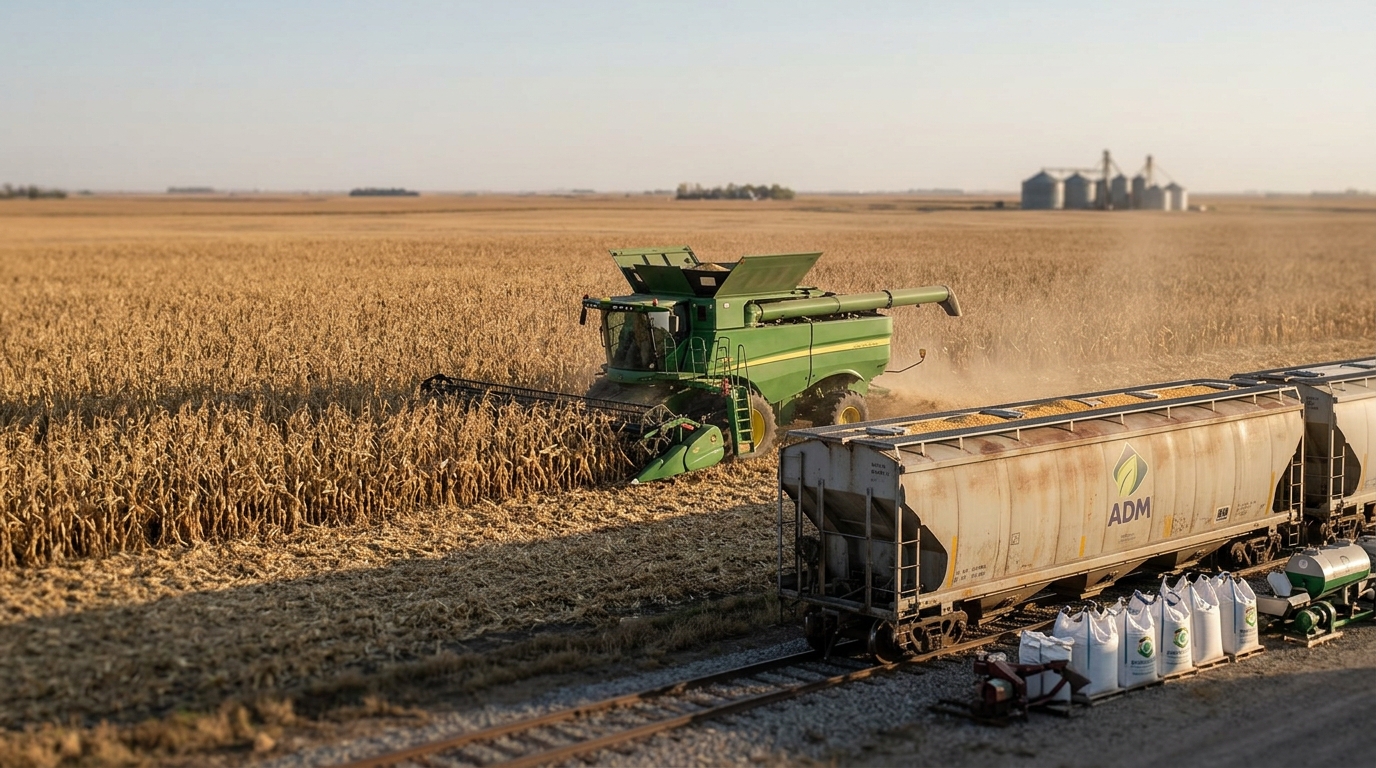
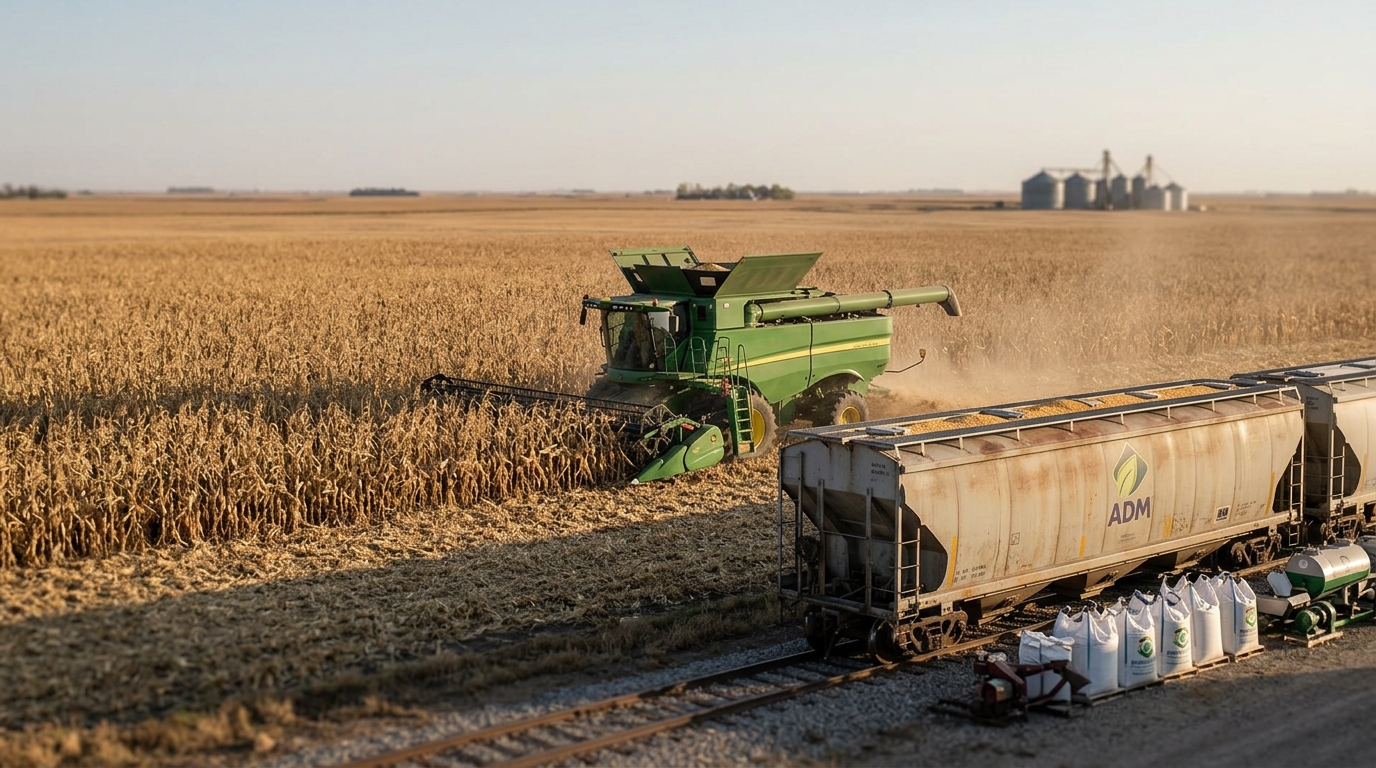
Yesterday’s number was not subtle. USDA’s quarterly Grain Stocks report put September 1 corn stocks at 2.10 billion bushels, up 35% from a year ago. The count landed 173 million bushels above the 1.922-billion-bushel ending-stocks projection USDA published in the September WASDE just two weeks ago. Corn fell more than 3% to around $5.00 a bushel, the lowest in five weeks.
Why This Trade Stands Out
The corn selloff gets the headline. What the market has not fully absorbed is what a sustained $5.00 corn price does to the farm balance sheet heading into spring planting decisions. That is where the options opportunity sits: not in corn futures, but in the equity names most exposed to a hard reset in farmer spending. Several of them are still priced for a commodity environment that existed 48 hours ago.
The Story Behind the Trade
September 1 stocks totaled about 2.10 billion bushels, roughly 170 million bushels above the average trade guess. The September report closes the books on the 2025/26 marketing year, and these stocks become beginning stocks for 2026/27. That means the bearishness compounds forward: every bushel of unexpected carryout is a bushel that must compete against the incoming harvest.
Rain from the remnants of Hurricane Polo is spreading from the Southwest through the Plains into the Midwest, with flooding risk extending corn and soybean harvest delays. USDA’s stocks report broke the Q3 grain rally, with December corn down more than 4%, and harvest delays from Hurricane Polo’s remnants are the main offset to further liquidation. Weather noise aside, the structural story is bearish corn and, by extension, bearish farm income.
The USDA already forecast a 0.7% year-over-year dip in net farm income to $153.4 billion in 2026. That projection was built before corn shed 20 cents in a single session. Lower corn receipts will push realized farm income below that figure, and farmers plan their equipment and input purchases accordingly.
Technical and Fundamental Alignment
Deere closed at $680.50 on September 29, just off its all-time closing high of $709.48 on September 23. Net sales for Deere’s Production and Precision Agriculture segment are expected to decrease 5% to 10% year over year. A stock near an all-time high with large-ag revenues declining is a stock that has already priced in recovery. If corn income softens further, that recovery gets delayed, and the valuation premium becomes harder to defend.
Mosaic and CF Industries have their own complications. Mosaic posted a net loss of $273 million in Q2, driven by sharply higher sulfur and ammonia costs that compressed phosphate margins and forced production curtailments. Cheaper corn reduces fertilizer application economics for farmers, adding demand-side pressure on top of already stressed margins. ADM and Bunge thrive on high throughput and crush margins, and higher raw material costs coupled with lower export volumes can compress those margins.
Options Perspective
The thesis here is straightforward: the ag complex has just received a fundamental shock, the equity names have not fully priced it in, and implied volatility in names like DE, MOS, and CF has not spiked the way it does after an earnings miss. That gap is the opportunity. November put spreads on Deere, buying the $650 strike and selling the $620 strike, offer defined risk against a thesis that the stock revisits pre-rally levels as farm-income data catches up. MOS put spreads in a similar structure, given the stock is already under pressure and short interest has been climbing, offer a lower premium entry for a name where the fundamental headwind is most direct.
The defined-risk structure matters here. Harvest delays from Polo could produce short-term cash-market support, and any surprise in the October WASDE could stabilize sentiment temporarily. Neither invalidates the medium-term thesis, but both can create violent intraday moves against short positions. Spreads contain that exposure.
Risk Management
The main risk to this view is a weather-driven demand surge: a late, wet harvest compresses the window for crop movement and could briefly re-tighten basis in ways that confuse the income picture. A temporary drying window may emerge in early October, but El Niño conditions could still restrict fieldwork windows later in the month. That means sustained harvest pressure, not a clean snap-back. Position sizing at 2% to 3% of account value per name is appropriate given the cross-currents.
The Beast Verdict
A 173-million-bushel corn surprise that breaks the market above every trade estimate is a first-order event for farm income, and farm income is the single variable that drives equipment orders, fertilizer applications, and grain merchandiser volumes. Deere is at a record high. Mosaic is losing money on its core business. The options market has not yet priced the income shock into these names the way it should. That lag is the edge. Watch the November USDA WASDE and any revision to 2026 farm income projections: those are the catalysts that force the market to close the gap.