Two numbers land on September 11 that, taken together, tell investors more about the health of the American grocery shopper than any single data point could alone. The Consumer Price Index for August 2026 is scheduled for release at 8:30 a.m. Eastern Time that morning. Thirty minutes earlier, Kroger hosts its second quarter 2026 earnings conference call at 8:00 a.m. ET on Friday, September 11. That timing is not a coincidence worth ignoring. It is an opportunity.
The question both events answer is the same one: how much of the beef inflation now crushing Tyson Foods is landing on the consumer’s plate, and how much is being absorbed somewhere along the supply chain?
What Tyson Just Told the Market
The beef cost picture deteriorated sharply this week. Tyson Foods updated its fiscal 2026 outlook on September 3, citing additional pressure in its beef segment during the fourth quarter, driven by significant margin compression amid volatile cattle prices and a severe cattle shortage in the U.S. Tyson now projects a beef segment operating loss of $625 million to $775 million for the full year.
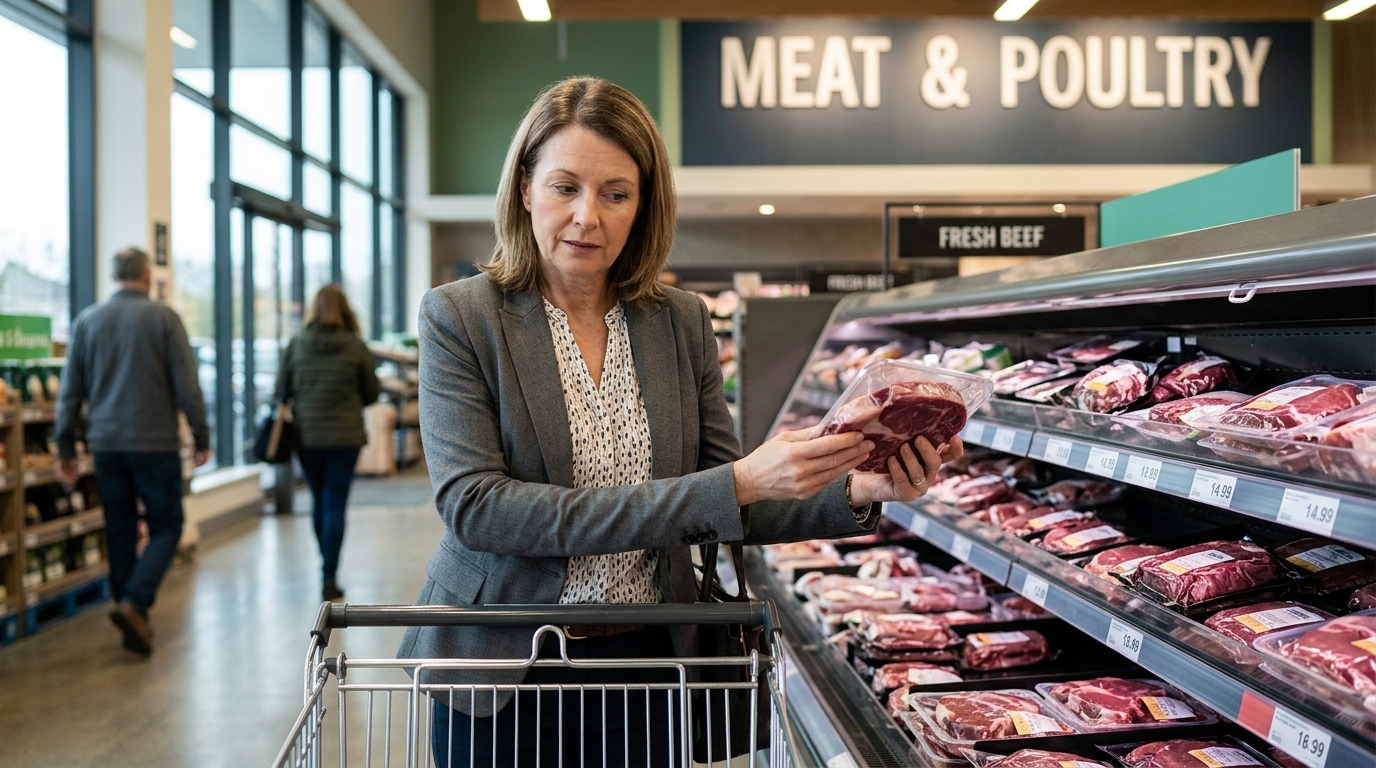
The structural cause is not new, but it keeps getting worse. Beef has been running roughly 16% higher year over year in widely cited retail price measures earlier in 2026, and cattle supplies have tightened sharply as ranchers have been slow to retain heifers for breeding. Tyson’s CFO has said cattle supplies will remain tight through 2026 and into 2027. That is not a quarter’s worth of pain. It is a multi-year structural cost embedded in every grocery store’s meat case.
What Kroger Must Answer
Kroger’s first quarter showed a company managing carefully in a difficult environment. The grocer reported first-quarter sales of $46.1 billion. Adjusted e-commerce sales grew 19%, and Kroger Precision Marketing profit increased over 20%. Those are real strengths. But gross margin told the harder story: gross margin narrowed to 22.7% of sales from 23.0% a year earlier, weighed down by higher transportation costs, egg deflation, and planned price investments.
For Q2, Wall Street expects earnings per share of $1.05 and revenue of approximately $34.6 billion. The more important number may be what management says about the back half. Citi added a downside 30-day catalyst watch on Kroger, with analyst Paul Lejuez seeing inline Q2 results but warning that management may take a more conservative second-half view amid industry pressures.
The specific concern is guidance. Citi anticipates management will reduce full-year comparable sales guidance to 1.0% to 1.5% from the previous 1.0% to 2.0%, and trim earnings guidance to $5.00 to $5.20 from $5.10 to $5.30. The reason: Walmart’s nearly $3 billion in tariff refunds is being invested back into price leadership, with executives saying they are prioritizing grocery and general merchandise categories, a direct competitive pressure on Kroger’s ability to hold both volume and margin simultaneously.
The Portfolio Question
Kroger carries a beta of roughly 0.41, which makes it one of the lower-volatility names in the S&P 500. That defensive profile is exactly why investors own it during periods of economic uncertainty. The share price has been under pressure over the past year, and investors should check the latest quote for current year-to-date and 12-month performance.
The irony is real. A grocer selling food to inflation-stressed consumers is itself squeezed by food-cost inflation it cannot fully pass through. Price-conscious consumers have intensified competition with Walmart and Costco, prompting Kroger to announce markdowns on thousands of products, financing those cuts partly through direct-sourcing savings and technology efficiencies.
Long-term holders should not abandon the position on a guidance trim alone. Kroger’s e-commerce profitability, its private label momentum, and its pharmacy business are structural advantages that persist through cattle cycles. But the investment case for adding to the position at current levels depends heavily on whether September 11 reveals a management team that has genuinely sized the competitive threat from Walmart, or one that is still hoping it proves short-lived.
The Wealth Builder Takeaway
Defensive does not mean immune. The lesson from Kroger’s current position is that even the most stable consumer staples businesses face periods when the forces bearing down on their customers also bear down on their own margins. The strongest portfolios hold these names for their long-term cash generation and dividend consistency, while sizing positions to reflect that short-term earnings risk is real. Watch the guidance range on September 11 more than the quarterly result itself. That is where the actual information lives.