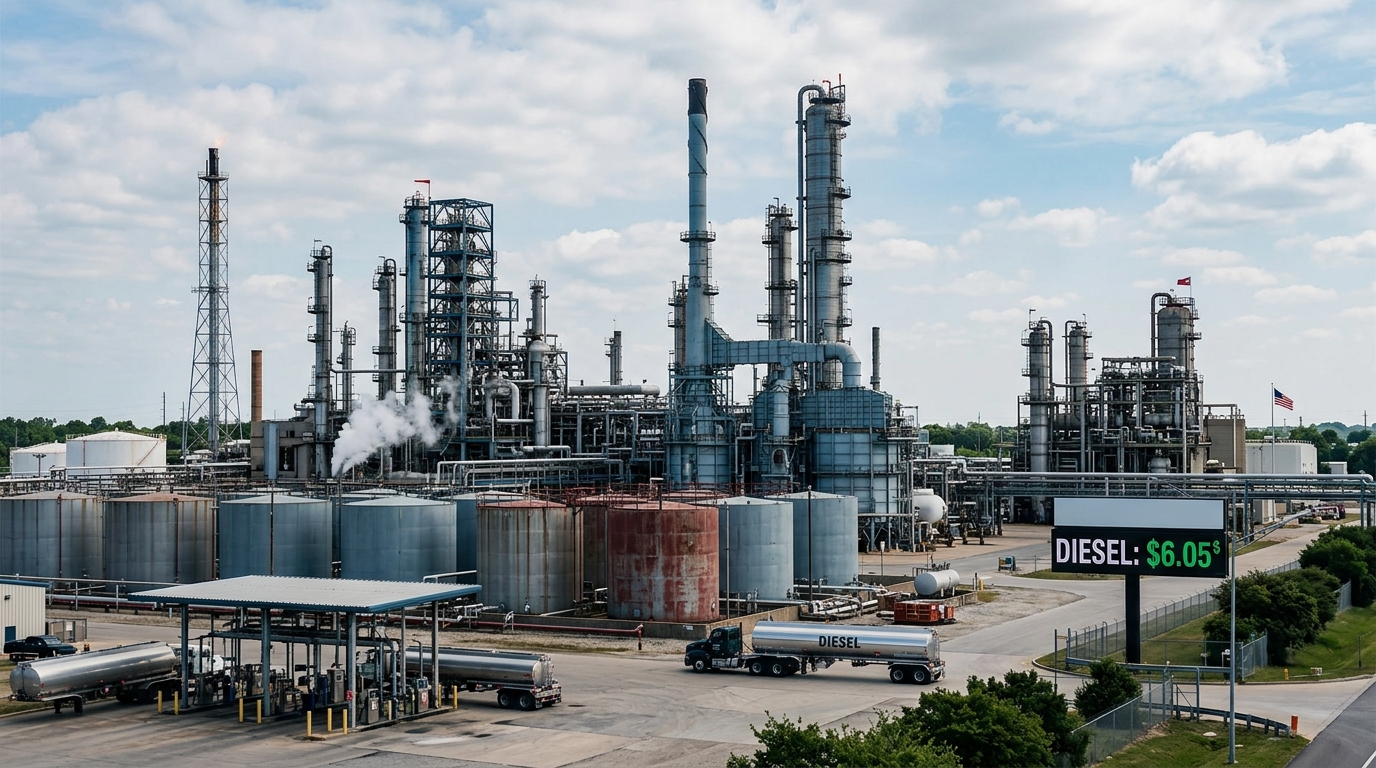
The diesel market handed traders two sharp surprises in 48 hours. U.S. diesel prices rose above $6 a gallon for the first time ever, with the national average at $6.0556 according to AAA. Then, on Monday, President Trump posted on Truth Social that Ukraine had agreed not to hit Russian energy targets and that Russia had agreed to do likewise. Neither claim has been independently confirmed. Ukrainian President Zelenskyy said no deal had been finalized, while Trump blamed the refinery strikes, rather than the Iran war, for the diesel surge.
These two headlines pull in opposite directions. Get the trade right, and one of them makes money. Get it wrong, and an already extended refiner rally meets a credible supply catalyst on the other side.
The Refiner Trade Right Now
The U.S. diesel crack spread hit an all-time high of $102.20 per barrel earlier this month, and the stocks have moved accordingly. Shares of Marathon Petroleum, Valero Energy, and Phillips 66 have gained 110%, 98%, and 75%, respectively. The earnings behind those gains are real. Phillips 66 posted second-quarter adjusted earnings of $9.41 per share, nearly tripling year-over-year and easily beating the $7.68 consensus. Marathon’s refining and marketing segment generated about $6.7 billion in adjusted EBITDA, with the company running Gulf Coast refineries at 100% utilization.
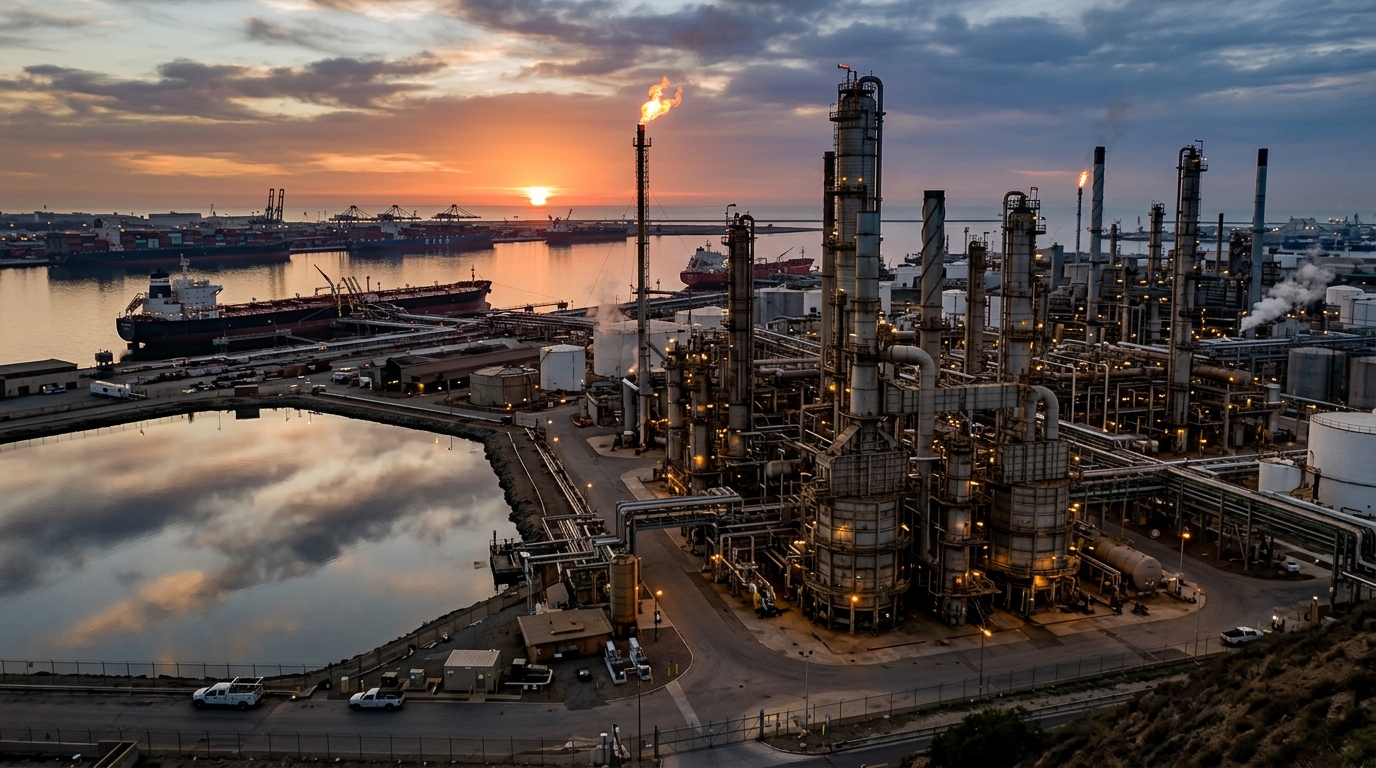
The structural reason refiners kept outperforming even as Brent pulled back from its peak is straightforward. The problem is two-fold: oil futures have surged back above $100 a barrel, and there simply are not enough refineries operating to turn crude into fuel, with Middle Eastern and Russian plants damaged by war. Global refinery throughput in July ran nearly 5 million barrels per day below year-earlier levels as Ukrainian attacks pushed Russian processing close to a 20-year low. American refiners filled that gap.
What the Truce Does to the Thesis
The truce, if it holds, compresses the very spread that drove these stocks. The IEA reported that combined net diesel and gasoil exports from Russia and the Gulf were 1.6 million barrels per day lower in August than in February, and before the disruptions those suppliers accounted for nearly 45% of global seaborne trade in those fuels. Restored Russian output would reduce demand for U.S. replacement exports and push crack spreads lower from historic levels.
History here is useful. September NYMEX 3:2:1 spreads sit near $69.92 per barrel, versus $44.38 for August 2027, implying the market already prices in some normalization; the pre-war average from 2016 to early 2026 was $21.68. The gap between where spreads trade today and where they averaged before the conflicts is the embedded geopolitical premium inside every refiner stock. Geopolitical premiums are reversible, and a ceasefire in the Gulf that actually holds would push crack spreads sharply lower.
The critical qualifier is enforceability. A halt to strikes would not immediately restore exportable fuel: damaged equipment still requires repair, plants need to restart, and additional production must become available for shipment. The truce is a headline risk, not yet a supply event.
The Other Side: Trucking and Agriculture
While refiners navigated a sudden risk factor, the companies on the demand side of this diesel spike face a different problem. For trucking fleets, fuel is the second-largest operating expense after driver pay, and trucks move more than 70% of the nation’s freight by weight. Department of Energy average diesel prices for the second quarter of 2026 were $5.35 per gallon, a 50.4% increase from the same period in 2025. With diesel now at $6.06, that cost pressure is still accelerating.
According to the EIA, U.S. consumption of critical distillate fuels increases by an average of 4% between September and October as harvest season and early heating demand converge. One Texas farmer reported his diesel bill went up $23,000 in a single month before this latest leg higher. At $6-plus per gallon entering peak agricultural demand, margin compression in farming and freight is not a future risk; it is a current one. Fuel accounts for roughly 15% to 30% of the total cost of food, according to the Independent Grocers Alliance.
The Trade
Marathon, Valero, and Phillips 66 remain structurally sound businesses, but the S&P 500 Oil and Gas Refining and Marketing sub-industry group has jumped 104% this year and sits 41% above its 150-day moving average, a condition that has appeared only five times historically, with a negative six-month forward return in all five instances averaging negative 10.1%. The refinery truce is unverified and probably unenforceable in the near term, but it introduces a new ceiling on these names that did not exist a week ago. Hedge the spread risk, watch the crack spread daily, and treat any confirmed reduction in Ukraine’s drone campaign against Russian refineries as a direct signal to reduce refiner exposure.