
September 21, 2026
Bonus Content: Google Is Already Fighting Three Antitrust Battles. Now There Is a Fourth.
Dear Reader,
Do you hold any of these AI stocks?
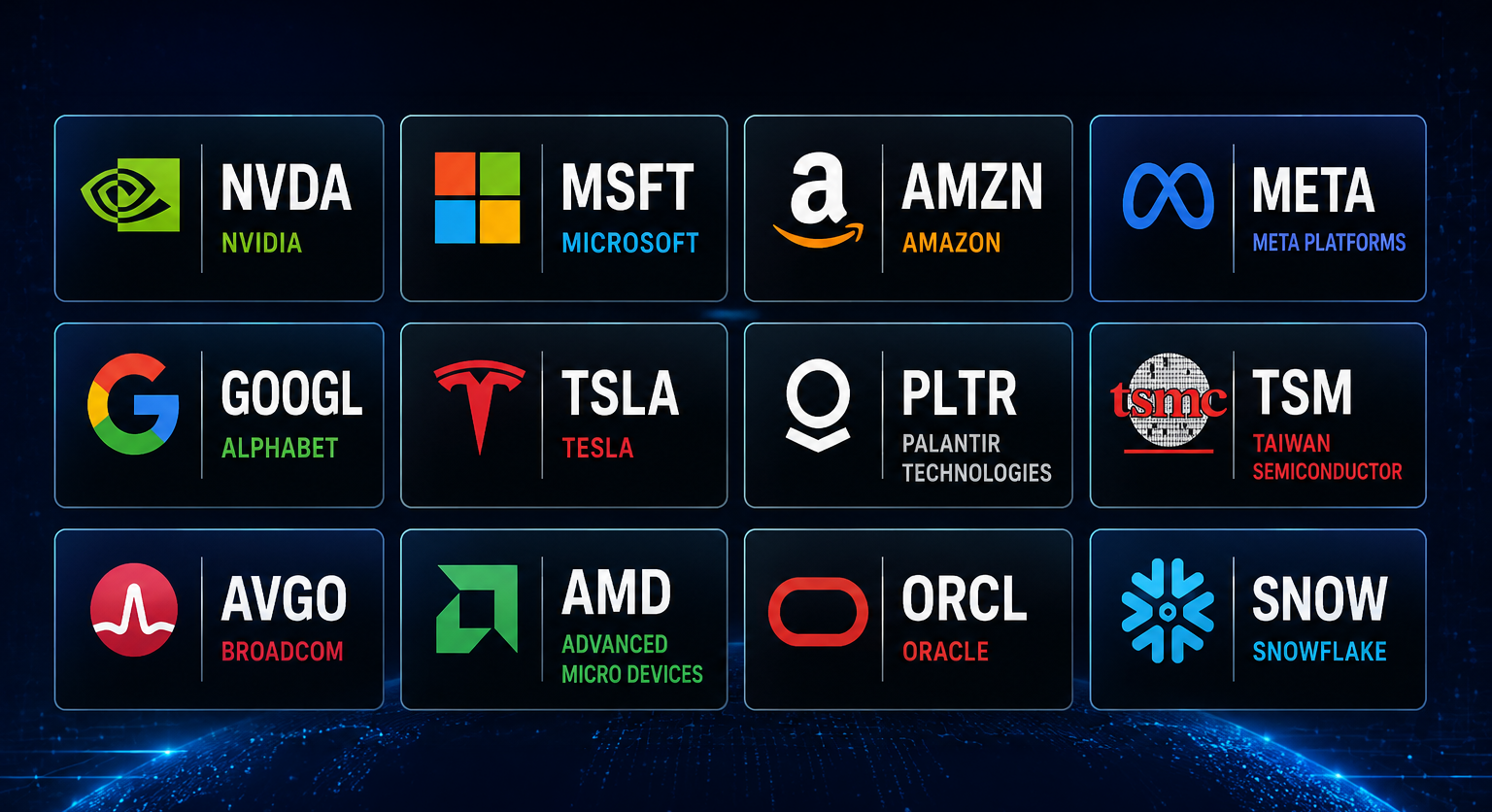
Wall Street insider Jason Bodner – the man who called Nvidia at $4.50 – says today’s AI stocks are about to hit a wall.
And a completely different group of AI firms… names Wall Street is starting to ignore… are about to take off.
This has nothing to do with SpaceX…
A new chatbot…
Autonomous robots…
Or anything you’re likely hearing about.
It has to do with a brand-new “light-speed” device turning AI as we know it into “Accelerated AI”…
Making it 100 times faster…
And 100 times more energy efficient – right here, on Earth.
Already, some of the biggest tech investors like Elon Musk, Mark Zuckerberg, Cathie Wood, and Bill Gates are moving money into it.
Just to name a few…
They’re all moving money to prepare for what’s coming.
But you won’t hear anything about it in the mainstream news…
In fact, TV pundits spent most of this past year talking about AI worries and its “existential risk” to jobs…
Or arguing whether we’re in an AI bubble and when it would pop…
That’s why most Americans won’t see it coming until it’s too late.
Don’t be one of them…
Because if you’re holding the wrong AI stocks when “Accelerated AI” goes mainstream…
You could spend the next decade just trying to claw back to even…
But if you make the one move Jason reveals in this urgent video message…
The next 12 to 24 months could hand you bigger gains than the entire AI boom of the last three years.
Click here to hear the full story and get ahead of the crowd.
But hurry, because this opportunity won’t stay hidden much longer.
We have so much to look forward to,
Jeff Brown
Founder & CEO, Brownstone Research
P.S. Jason also shares details on 10 popular AI stocks he says you must dump before this shift goes mainstream. Names sitting in millions of 401(k)s, IRAs, and brokerage accounts. Click here to see if yours made the list.
Google Is Already Fighting Three Antitrust Battles. Now There Is a Fourth.

The headline from Thursday morning is that four paying subscribers to ChatGPT, Claude, Grok, and Gemini filed a federal antitrust lawsuit against Anthropic, OpenAI, SpaceXAI, and Google. The legal theory is that the companies turned a safety agreement into a cartel. The options opportunity is squarely in GOOGL, the only publicly traded defendant.
What Happened
The complaint, filed Friday in the U.S. District Court for the Northern District of California, argues that the leading AI companies violated antitrust laws when they agreed to coordinate slowdown efforts, and that doing so would reduce the value consumers get for paid AI subscriptions. The coordination largely took place on September 12, when Anthropic CEO Dario Amodei published an essay urging industrywide cooperation on decelerating advancements in favor of safety. That same day, OpenAI’s Sam Altman and SpaceXAI’s Elon Musk publicly responded in agreement.
The plaintiffs also allege the coordination began earlier, pointing to a July 2026 statement signed by employees from several AI labs that acknowledged intense competitive pressure not to unilaterally slow development and urged the government to back a worldwide push to deliberately pace the frontier of automated AI progress. The complaint is explicit: “The antitrust laws do not permit competitors to decide among themselves that competition is too dangerous.”
Meanwhile, the same weekend the suit landed, President Trump announced he is creating an AI Force and plans to name an artificial intelligence czar as his administration pushes to accelerate the growth of AI in the U.S. That political context matters. An accelerationist White House is an adversarial environment for any company that just put its name on a voluntary slowdown pact.
Why Alphabet Is the Trade
Anthropic and OpenAI are private. SpaceXAI is private. Alphabet is not. GOOGL shareholders are the ones who absorb every legal headline, and this is not the first. Alphabet is fighting on two legal fronts simultaneously before this filing even arrives. Following Judge Mehta’s September 2025 remedies decision, which prohibited Google from entering exclusive contracts for Search while mandating that the company share its search index and user-interaction data with rivals, both sides filed competing appeals. A separate federal judge overseeing the DOJ’s ad-tech antitrust case ruled that Google will not have to sell its AdX exchange, opting for behavioral remedies rather than the structural breakup regulators had sought, a relative win, but still an active litigation drag.
Now add a third case. This one is early, and the antitrust theory is novel enough that courts may well dismiss it. But early-stage suits consume management attention, generate press cycles, and can expand in scope during discovery. Alphabet has already accumulated about €8.25 billion in EU antitrust penalties from years of European regulatory action. The market knows how to price legal risk when it compounds.
The Options Angle
As of September 11, with GOOG trading near $328.94, at-the-money implied volatility for options closest to 30 days out was approximately 29%, well above the 18.0% the stock had actually realized over the prior 20 days. GOOG closed Thursday September 18 at $344.41. IV is elevated but not panicked, which means defined-risk bearish exposure remains priced at levels that do not yet reflect a four-front legal war.
The strategy that fits here is a bear put spread on GOOGL: buy a put closer to at-the-money, sell a lower-strike put to reduce premium paid, and target a three-to-six week window that captures any further legal news cycle. A spread structure keeps the premium at risk defined from entry and sidesteps the IV crush risk that plagues outright long puts.
What Would Break the Thesis
A rapid motion to dismiss by a sympathetic judge. A broader market rally that lifts GOOGL past recent resistance in the mid-$350s. Any ruling in the appeals process that resolves one of the existing antitrust tracks in Google’s favor would remove a headline overhang fast. The usual volatility catalysts for GOOGL are quarterly earnings, major AI product announcements, and scheduled court decisions in antitrust cases, all of which can reverse a bearish thesis overnight.
The Beast Verdict
This is not a bet that the cartel suit wins in court. It almost certainly does not, at least not quickly. It is a bet that the market has not yet priced a fourth simultaneous antitrust action onto a stock already navigating two active appeals, fresh EU regulatory obligations, and a White House that just took the opposite policy position from Google’s own CEO. Four legal fronts is a lot to carry. Defined-risk puts give you exposure to that weight without requiring a crash to profit.