JPMorgan’s credit strategists Tarek Hamid and Nathaniel Rosenbaum published their 2027 outlook this month, and the number getting the most attention is $450 billion. That is what JPMorgan expects companies to raise through the US investment-grade bond market in 2027 to fund AI capital expenditures, up from $368 billion in 2026. Clean forecast. The harder question is who, exactly, is expected to show up and borrow it.
Roughly $225 billion is expected from hyperscalers, and another $225 billion from financing tied to data-center construction and chips. The hyperscaler half is manageable. For companies like Meta, Microsoft, and Oracle, free cash flow has come under pressure amid the sharp rise in AI capital expenditures and they are increasingly tapping the debt market for funding. But their investment-grade ratings give them access to deep, liquid markets at spreads that remain relatively tight. That $225 billion will get placed.
The other half is where the investment committee discussion gets uncomfortable. Data center and GPU deals had raised just $43 billion in 2026 by mid-November, so the forecast is asking that segment to do more than five times as much in 2027. And the benchmark for what that financing looks like right now is CoreWeave. On November 25, 2026, CoreWeave’s 9.75% senior notes due 2031 fell to about 74 cents on the dollar, pushing the yield to roughly 17.9%, while its 2030 notes hit a record low price; reports tied that 2030 move to a yield of about 18.6%. CoreWeave’s stock has also been down roughly 77% from its June 2025 peak.
That is not a quirk. CoreWeave carries a B+ issuer credit rating from S&P Global Ratings, which is junk territory, and with rates higher than the ultra-low era, highly leveraged companies like CoreWeave are bearing the brunt of it. CoreWeave’s five-year credit default swaps spiked above 1,289 basis points on November 5, 2026, according to Deutsche Bank data cited in market coverage. Bond buyers who are being asked to absorb a fivefold increase in data center and GPU paper in 2027 already know what the market’s price discovery looks like in this segment.
The Structural Fault Line
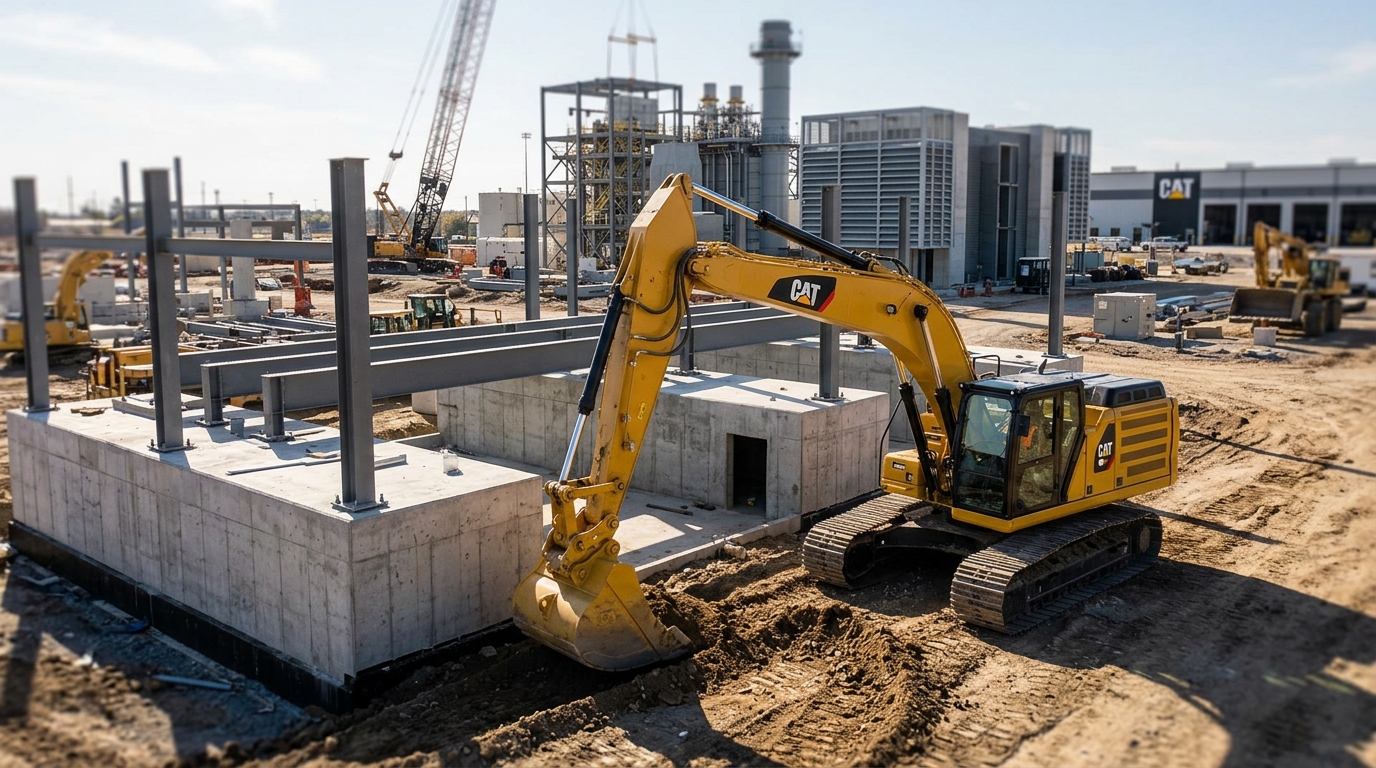
JPMorgan’s own strategists flagged the asymmetry inside the forecast: most data center projects require upfront capital and take several years to complete, so 2027 funding is effectively financing 2028 construction. That means bond buyers in 2027 are being asked to finance a buildout whose revenue payoff is still a couple of years away, in a credit environment where the market has already decided that the riskiest AI borrowers should yield close to 18%.
JPMorgan presents this as a more predictable bond supply environment taking shape as growth slows, while flagging the other side of the same coin: investors who bought AI credit for its expansion story may lose appetite once that story flattens. That is precisely the tension. The forecast implies orderly absorption of a historic supply wave. The market is currently charging distressed-like rates on the borrowers who need it most.
What Investors Are Missing
The debate focuses on volume. The overlooked variable is the structural shift inside the volume. JPMorgan’s strategists argue the mix of AI accelerator financing is likely to increase dramatically across public and private markets, with GPU financing needs rising far faster than traditional “power shell” style real-estate financing over time. GPU-backed debt is a newer, less liquid, and less understood asset class than real-estate-backed data center financing. Asking bond markets to scale it fivefold in a single year, while CoreWeave bonds trade near record lows, is a significant ask.
Beyond that, JPMorgan also lifted its five-year call for US investment-grade supply to $2.1 trillion for 2027. That means the question of market capacity is not confined to one calendar year. It is a structural feature of the decade’s financing calendar.
Stocks to Watch
CoreWeave (CRWV) is the clearest signal in credit markets right now. Its bond yields tell you what the market thinks about speculative-grade AI borrowers, and any tightening there would directly lower the cost of the data-center and GPU financing half of JPMorgan’s forecast.
Oracle (ORCL) sits at both ends. Market coverage of large Oracle and OpenAI-linked data center projects has highlighted how central Oracle has become to the project-finance side of the AI buildout. Oracle is both a hyperscaler borrower and the anchor of multiple project financing structures, making it sensitive to any change in market appetite.
Microsoft (MSFT) is widely seen as a potential source of meaningful incremental bond supply among the hyperscalers given its scale and AI commitments. If it adds supply to the calendar, it would likely clear at far tighter spreads than the data center financing tier.
Nvidia (NVDA) benefits if GPU-backed financing scales as projected, since the entire data-center and chip financing pool ultimately purchases compute. But Nvidia also carries indirect exposure: market commentary this fall has pointed to rising default-protection costs across AI-linked companies, including Nvidia, Broadcom, and Oracle, as a sign that credit stress is spreading up the supply chain.
Meta (META) is straightforward. After reporting negative free cash flow in the third quarter of 2026 amid elevated capex, Meta has been widely expected by market watchers to remain an active bond issuer as it funds aggressive AI investment plans. At investment-grade spreads, the demand side should accommodate it. The question is whether that demand holds as the broader AI credit picture deteriorates.