
September 6, 2026
Bonus Content: Copper Pulled Back From Its Record High. Supply Math Hasn’t Changed.
Wall Street Has a Blunt New Name For What’s Happening To The Dollar
Gold hit a record $5,300 this January. The dollar hit a four-month low the same day. Wall Street doesn’t think that’s a coincidence.
They’re calling it the “Sell America” trade. And that’s not a fringe blog talking.
JPMorgan’s market intelligence team flagged it as potentially the market’s dominant narrative. Deutsche Bank pointed to investor concern about currency debasement and future inflation. BCA Research told clients the dollar debasement trades were running hot.
What are they all reacting to? Here’s what the financial press has documented:
✅ Fortune reported gold at a record $5,300 this January, up more than 22% year to date
✅ The dollar sank to a four-month low, falling 1.3% in a single day during the January slide
✅ Business Insider reported silver’s best-ever start to a year, tying the moves to mounting pressure on the Federal Reserve
And the White House? Asked about the falling dollar, the president called it “great.”
That’s why major institutions aren’t waiting to react. Analysts quoted by Fortune and Business Insider describe investors rotating out of dollar-denominated assets or hedging their exposure. Not panicking. Not predicting. Just quietly reducing how much of their wealth depends on one currency.
Gold has since pulled back from those January records. For the big institutions, that’s historically not a reason to look away. It’s when positioning happens.
For the everyday American who’s worked hard to build a nest egg, the tax code allows eligible IRA and 401(k) accounts to be diversified into physical gold and silver through a properly structured self-directed IRA, without taking a taxable distribution when completed correctly.
Download Your FREE Precious Metals Retirement Guide and learn the simple steps many savers are reviewing right now.
Historically, those who prepare ahead of financial turbulence have tended to fare better than those who don’t.
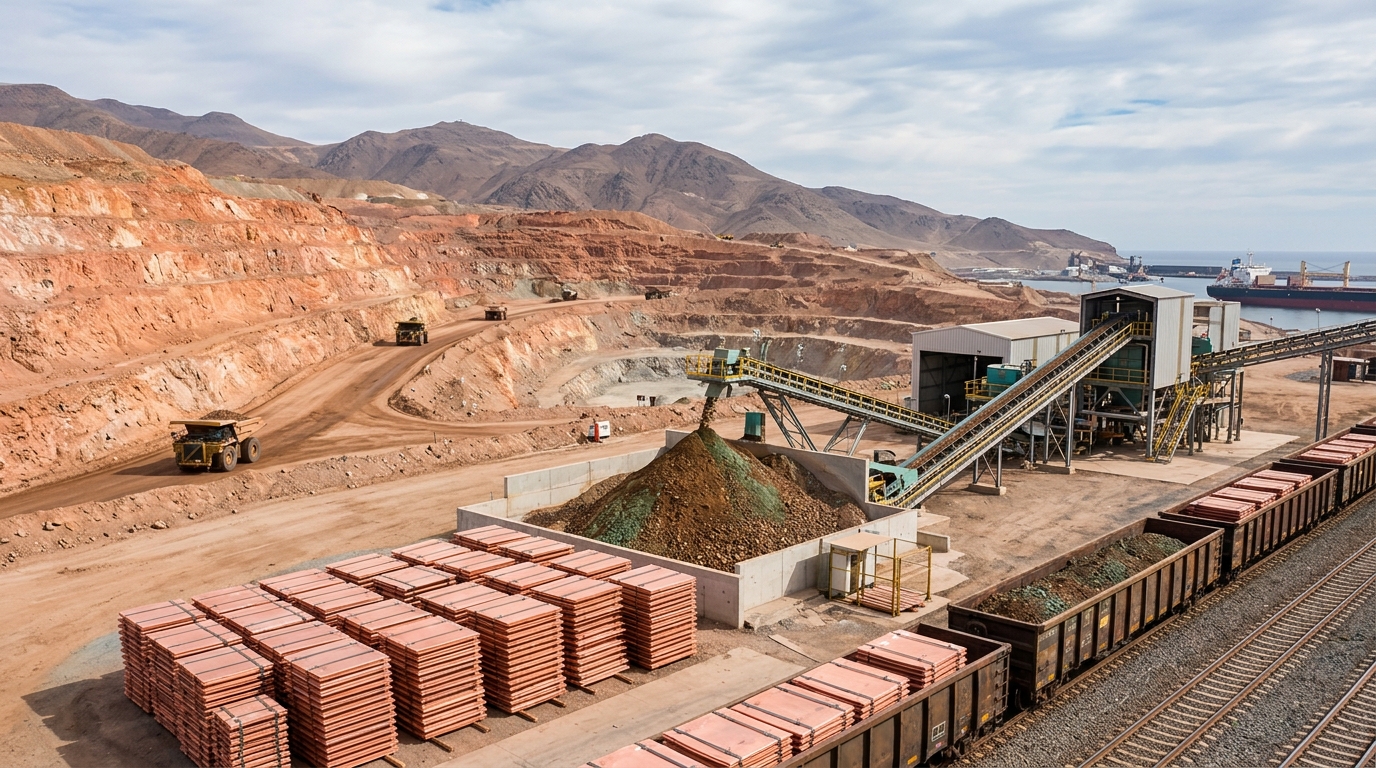
Copper Pulled Back From Its Record High. Supply Math Hasn’t Changed.
Comex copper set an all-time high settlement of $6.714 per pound on August 25 and has since pulled back to around $6.50. The retreat came fast: renewed hostilities between the US and Iran raised concerns that elevated energy prices could weigh on global economic activity and metals demand. That is a real risk. It is also, almost certainly, the wrong thing to focus on right now.
The supply picture that drove copper to that record has not budged. Chile’s copper production fell 9.4% year-on-year in July due to severe weather and mine maintenance. And then there is Congo. Congo banned exports of copper concentrate and cobalt concentrate in a major escalation of its drive to force domestic processing and retain more value from its vast mineral resources. Congo accounted for roughly three-quarters of global cobalt mine output, as well as about 14% of mined copper and 10% of refined copper.
Beneath all of this sits a signal the options market and futures traders read clearly: the TC/RC benchmark. The annual TC/RC benchmark, which is based on an agreement between Chilean miner Antofagasta and major Chinese smelters, settled at USD 0 per tonne in January 2026, the lowest level ever agreed in annual negotiations. Miners traditionally pay TC/RCs to smelters to cover the cost of converting copper concentrate into refined metal, and those charges fall when mine supply tightens and smelters accept poorer terms to secure concentrate. A zero benchmark is not a negotiating outcome. It is a verdict on how scarce concentrate has become.
Meanwhile, China’s copper import premium reached $100 per tonne in late July as Shanghai Futures Exchange inventories fell to 79,909 tonnes, down more than 80% from their March peak, according to Shanghai Metals Market. The Comex inventory bulge that bears cite is largely a tariff arbitrage artifact: the US imported more than 200,000 tonnes of copper in July 2026, its biggest monthly inflow in at least 12 years, as traders shipped metal ahead of a possible tariff on refined copper. That import wave helped push combined COMEX and LME stocks above 740,000 tonnes, but that is not the same thing as comfortable global availability, with tariff arbitrage pulling refined metal toward the US while Chinese buyers have faced a much tighter physical market.
The trade here is not Comex copper directly. It is the miners, and specifically the pullback they have absorbed alongside spot prices. Southern Copper’s second-quarter sales reached $4.289 billion, up 41% year-over-year, with earnings per share up 72%. FCX reported second-quarter 2026 adjusted net income of $1.1 billion, or $0.74 per share, after adjustments.
The next supply headline out of Chile or Congo does not need to be large to move miners violently. The average timeline from copper discovery to first commercial production now stands at approximately 17.9 years, and copper lost today through weather disruptions in Chile cannot be recovered by new mines before the middle of the next decade at the earliest. That structural wall is what makes every fresh disruption asymmetric.
The Options Perspective
A bull call spread on COPX, the Global X Copper Miners ETF, targeting a move back toward the August highs over a 45-to-60-day window, fits the thesis tightly. COPX often trades as a leveraged play on copper prices, meaning the fund can experience significant volatility but be a powerful tool for profiting from a surge in the metal. With implied volatility elevated after the recent sell-off, buying an at-the-money call and selling a higher strike to offset premium cost defines risk before the trade begins. FCX calls are an alternative for single-name exposure, though one of SCCO’s biggest advantages relative to FCX is its lower costs and higher concentration in the copper business, making SCCO calls worth considering for a cleaner expression of the commodity thesis.
The Beast Verdict
The dip in copper miners this week is demand-fear driven. The supply disruptions that sent the metal to a record are geological and regulatory in origin, and neither Chile’s ore-grade problem nor Congo’s export ban resolves in weeks. Watch for any fresh production figure from Codelco or major DRC operations. Either one, trending worse, is the catalyst that could close the gap between $6.50 and the August record fast. Defined-risk call spreads on COPX let you own that outcome without owning the downside if US-Iran tensions escalate further.