The number that landed Tuesday morning was not a soft patch. The Conference Board’s Consumer Confidence Index fell 6.7 points in September to 81.9, its lowest level since April 2014, as households grew more pessimistic about both current conditions and the six-month outlook. Economists polled by Reuters had forecast a reading of 89.2. That is a miss of more than seven points, and the word on the investment committee floor is not “soft landing” anymore.
Both components deteriorated together this time, a break from August’s split picture: the Present Situation Index fell 7.9 points to 109.3, with consumer appraisals of current business conditions turning negative for the first time since September 2024, while the Expectations Index slipped 5.9 points to 63.6, sinking further below the 80 recession-signal threshold. That last detail matters. The Conference Board has said an Expectations Index reading below 80 is associated with recession risk within the year ahead.
The JOLTS data released alongside confirmed the direction. Job openings totaled 7.079 million at the end of August, below analysts’ expectations of 7.23 million, following the 7.335 million positions reported in July. The jobs-to-openings ratio, which spent most of early 2026 running above 1.1x, dropped back down to about 1.0x.
The Bull Case: Blame the Pump
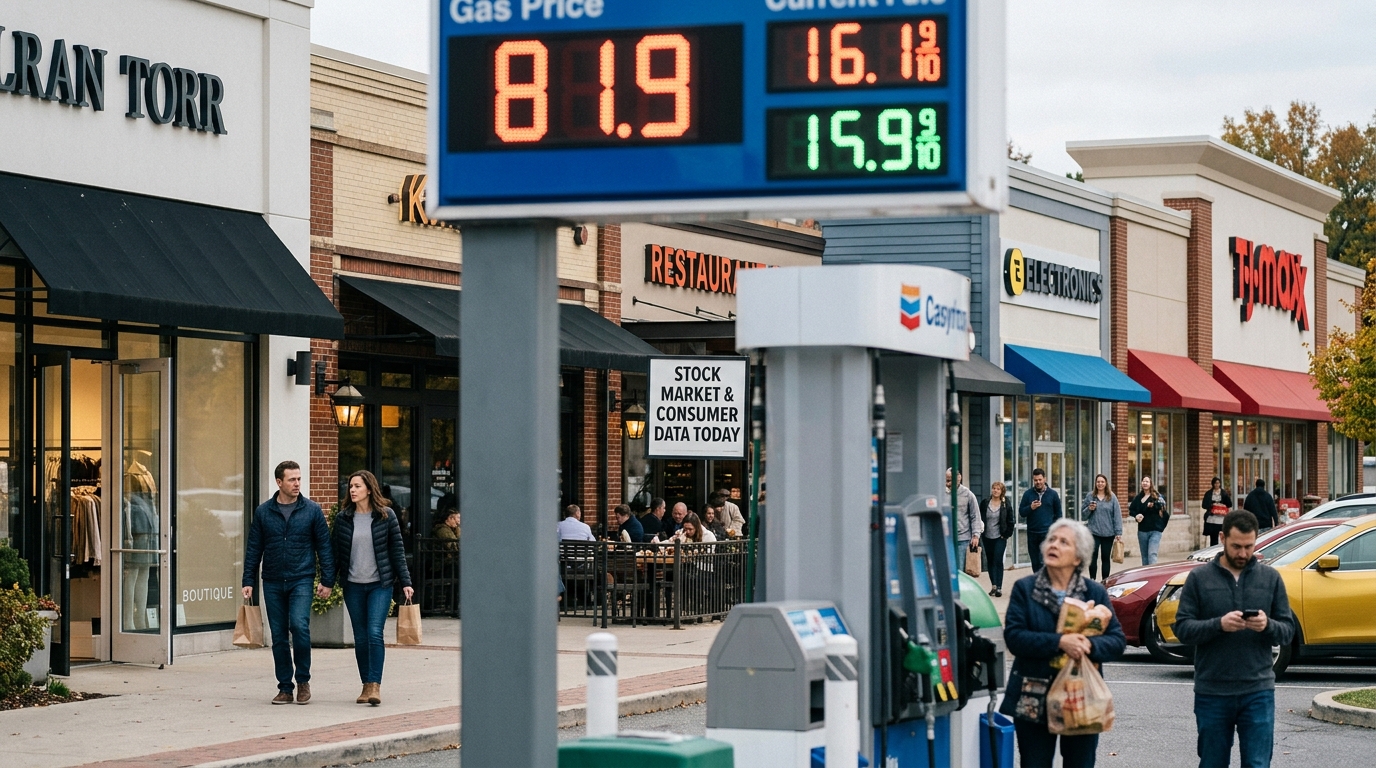
Conference Board chief economist Dana Peterson said price concerns dominated September’s survey responses, including oil and gas, reflecting a surge in fuel costs. That is the argument for the scare scenario rather than the recession scenario. If fuel costs pulled back sharply, September’s plunge could mean-revert in October, just as it has in prior energy-driven confidence dips. The survey window ran September 1 through 23, capturing peak anxiety around the fuel spike. Institutional investors holding this view are treating the 81.9 as a weather event, not a structural break.
Walmart, despite its own August stumble, still fits this camp as an operational hedge. Many shoppers have cut back on spending as they feel a strain from high fuel and food costs, yet Walmart is typically well positioned to weather pullbacks due to its value reputation and its scale as the largest U.S. retailer. TJX is the other name on the same side of the ledger. TJX and Ross benefit from shoppers looking for bargains regardless of whether the underlying cause is cyclical fear or genuine income pressure.
The Bear Case: The Cracks Are Structural
The recession camp reads the same data differently. For the first time since the question was added in 2022, more respondents said their personal finances were bad rather than good. Confidence fell in September across all political affiliations and, on a six-month moving average basis, trended down across all age groups and nearly all income groups. That breadth is hard to pin on gasoline alone.
Walmart’s own August earnings showed the strain is spreading beyond lower-income households. On its August earnings call, Walmart said it now expects more than $2 billion of incremental fuel-related costs this year, and it highlighted shoppers cutting back as fuel and food costs bite. The broader point is that even the trade-down beneficiaries can slow if pressure becomes a volume issue, not just a channel shift. (TJX’s most recent reported quarter showed sales growth well above 1%, so use this paragraph as the directional claim rather than anchoring it to a specific one-quarter number.)
What Investors Are Missing: The CAG Test
The overlooked implication lands this morning. Conagra Brands will release its fiscal 2027 first quarter results on September 30, 2026. Consensus calls for about $2.59 billion in sales and adjusted EPS around $0.28. Conagra is a packaged-food company, theoretically defensive. But new CEO John Brase is steering toward inflation-justified pricing concentrated in frozen foods, and the risk is elasticity: management has flagged larger-than-historical price sensitivity in frozen, where higher shelf prices could reduce household purchases. If consumers are genuinely in retreat, not just reacting to a gas spike, Conagra’s frozen-aisle volumes will say so before next month’s confidence survey does.
Stocks to Watch
- Walmart (WMT): The bellwether. Value positioning and tariff refunds provide near-term support, but its August earnings already showed the consumer cracking at the edges. Watch Q3 same-store sales guidance closely.
- TJX Companies (TJX): The trade-down thesis is intact in concept, but the growth rate can decelerate if the confidence slump turns into a broad volume problem.
- Conagra Brands (CAG): Reporting today into the worst confidence reading since April 2014. Volume elasticity in frozen foods is the live test of whether this is a fuel scare or something harder to reverse.
- XLY / XRT: The ETF pair is where the fuel-scare versus recession debate gets priced in real time.