October 7, 2026
The market panicked over who owns the tool. It missed who owns the backlog.
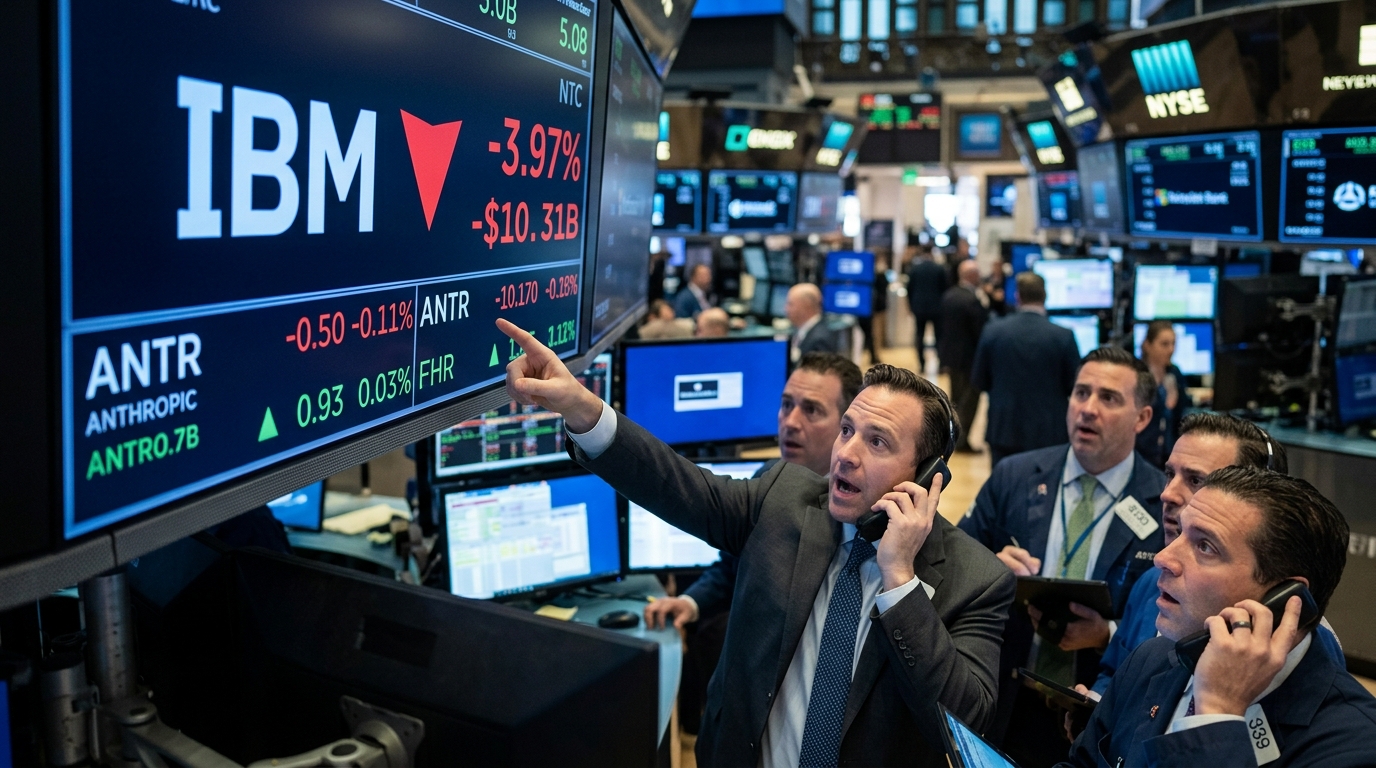
In February 2026, Anthropic published a blog post. By the end of that trading session, IBM had shed more than $31 billion in market capitalization, its worst single-day drop in more than 25 years. The thesis was simple and seductive: if an AI model can now read and translate COBOL, IBM’s moat evaporates overnight.
The #1 Commodity Trade of 2026
Gold bugs are going to hate this. The #1 commodity trade of 2026 isn’t gold, silver, oil, or any rare earth metal. It’s something far more valuable – something The New York Times says “powers the world’s tech.”
And America controls over 80% of the world’s supply. When Trump restricts exports, Morgan Stanley estimates it could trigger a $10 trillion boom. And you have the rare opportunity to get in on the ground floor.
The market got the catalyst right and the conclusion badly wrong. That gap is where the options opportunity lives.
What the Sell-Off Missed
Translating COBOL is not the same as modernizing an enterprise system. The language is not the source of mainframe value. The platform is. The real work, the architecture redesign, the transaction integrity validation, the cutover planning, the testing against decades of undocumented business logic, still requires years of engineering and institutional trust. Mitch Ashley of The Futurum Group called the idea that a single AI tool would handle all COBOL modernization “an unrealistic claim on its face.”
Roughly 220 billion lines of COBOL code remain in production worldwide, business logic that must be incrementally modernized, not rewritten all at once. Talent pools for COBOL are shrinking fast, with many mainframe specialists nearing retirement. That combination, enormous code volume and a thinning workforce, does not shrink the backlog. It expands it.
Bigger than Nvidia? Louis Navellier thinks so.
In 2016, Louis Navellier recommended Nvidia at $2.51 – split-adjusted. It went up 44,000%. He also called Apple before a 36,000% rise and Microsoft before a 60,800% climb. Now he says a new AI device coming online in Tennessee is the setup for the biggest call of his career.
He’s agreed to reveal the stock at the center of it – down to the ticker – for free.
Who Actually Holds the Contracts
The companies positioned to capture that backlog are not the AI labs. They are the enterprise integrators with existing bank relationships, compliance track records, and the ability to manage a cutover when critical daily payment and settlement flows depend on it getting done right.
Kyndryl signed $13.5 billion in new contracts in fiscal 2026, including 38 deals exceeding $50 million, with more than 30% representing new scope or new logos, double the prior year’s rate. The North Carolina Division of Motor Vehicles awarded Kyndryl an $84.8 million contract tied to replacing multiple legacy COBOL-based systems on a Microsoft Azure-hosted platform. Meanwhile, Morgan Stanley has modernized more than 17 million lines of COBOL, Natural, and PERL code into Java and Python using its in-house platform DevGen.AI.
Nearly half of organizations say they are behind schedule on modernization goals, and nearly every organization surveyed has postponed at least one modernization project. Delay does not reduce revenue for the integrators. It prolongs it.
Live Like a Millionaire for $650/Month?
A penthouse for $650. Lunch for $6. Even a private chauffeur. Discover the “New Europe” where your dollar can unlock a lifestyle that costs a fortune back home.
The Options Angle
Kyndryl (KD) trades at a fraction of its enterprise IT peers despite holding a multi-year, multi-billion-dollar modernization backlog. IBM’s own management has argued that AI tools can boost mainframe demand, not cannibalize it. Discovery alone, the phase traditional vendors often quote at 18 to 24 months and millions of dollars, now can take weeks with AI-assisted mapping, which compresses the front end of projects and moves more banks from approval to active spend faster.
A defined-risk call spread on KD into its next earnings, targeting recovery toward the $15 to $17 range, captures the thesis without overexposure to macro risk. The position invalidates cleanly if signings growth stalls or consulting margins deteriorate further. Those are the numbers to watch. The COBOL panic was a misdirection. The backlog is real, the timeline is long, and the integrators collecting the fees are still very much at work.