
Dear Reader,
A lot of investors are looking at the AI boom like it’s a short-term phenomenon.
Like it’s a fad that’s going to die down pretty soon.
But nothing could be further from the truth.
Microsoft CEO Satya Nadella recently said we’re only in the “beginning phases of AI diffusion.”
And Goldman Sachs CEO David Solomon says the AI infrastructure buildout is still in the “early innings right now.”
AI still needs massive amounts of infrastructure, equipment, software, data capacity and supporting technology.
Which means as this buildout continues, the money flowing into AI could spread out into a whole new group of stocks that nobody has thought about until now.
In fact, our analysts at Weiss Ratings believe this is already happening.
Three AI stocks identified by our ratings system are already up 37%, 55% and 264%.
And we’ve identified 10 more Buy-rated stocks for a new special report: 10 Stocks to Own for the Next AI Boom
I’ll show you how to get your hands on this report.
But first, there’s a bigger question involved:
How do you consistently find lesser-known AI stocks that could benefit from this boom? Not just now but over the next decade and beyond?
The answer is inside our new presentation.
Eliza Lasky
Weiss Advocate
Albertsons Enters a Blackout Period With $9.3 Billion at Stake
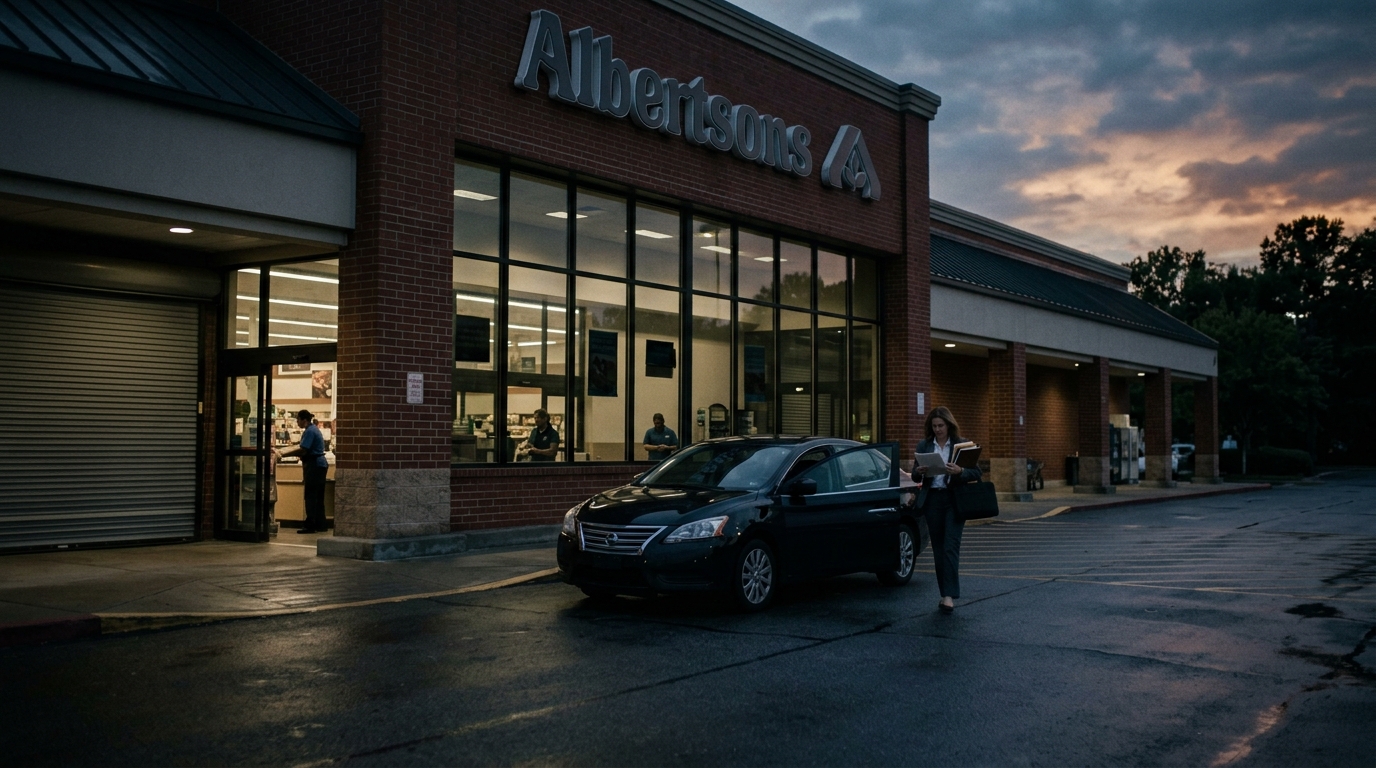
Albertsons (ACI) has two simultaneous problems, and the options market is pricing only one of them. The business is deteriorating. Q2 revenue came in at $18.89 billion, adjusted net income fell about 28% to $179 million, and identical-store sales dropped 0.8%. Management responded by doing something unusual: withdrawing full-year financial guidance and announcing it will not offer a revised outlook until the comprehensive business review is completed during its fourth quarter.
The review itself is sweeping. The examination covers customer strategy, cost structures, operating models, banner portfolios, market assets, and capital allocation priorities. By the fourth-quarter earnings call, Albertsons expects to unveil an updated financial framework covering both near- and longer-term horizons, paired with a turnaround plan, and the company said it is targeting an investor day in spring 2027. For options traders, that timeline matters: there is no near-term fundamental catalyst to anchor a short-dated position. This is not a trade built around the next earnings release.
The Bigger Number
The second problem is the one the grocery press underweights. In court filings in Delaware Chancery Court, Albertsons said Kroger should pay more than $9.3 billion over the collapse of the proposed $24.6 billion merger, including the premium stockholders would have received, a $600 million termination fee, and about $75 million in interest and additional costs. A trial is scheduled to begin October 19.
That claim is about 1.5 times Albertsons’ stock market value, which has been hovering around the mid-$6 billion range in recent days, and it is larger than the company’s net debt. Albertsons wants the Delaware court to rule that Kroger willfully breached the merger agreement by failing to use best efforts to win regulatory approval. Kroger disputes the allegations and maintains that regulatory opposition made the transaction impossible to complete despite its efforts to obtain approval.
The publicly listed company counts Cerberus Capital Management as its largest shareholder, with about a 31% stake based on recent institutional filings. Kroger’s legal counsel has written that Albertsons seeks to make Kroger “the guarantor of billions of dollars in liquidity its private equity sponsors have been unsuccessfully trying to extract from their Albertsons investment since 2021.” That framing is adversarial, but it points to a real tension: Cerberus has been patient for two decades, and the lawsuit is the clearest remaining path to a significant return.
The Options Angle
ACI’s implied volatility stands at roughly 43.79%, with an IV rank of 78.80% and an IV percentile near 98%. Options are not cheap here. The post-earnings pop in IV reflects uncertainty about the business review, but it does not fully separate the two distinct catalysts: the slow-burn turnaround and the court outcome starting October 19.
Because guidance will not return until the fourth-quarter earnings call, this is not a situation for weekly or monthly positioning. The thesis requires time. A long-dated bull call spread on ACI, using January 2027 expirations, gives the trial time to conclude and the turnaround review time to produce early signals without paying for unlimited upside into a stock that has real fundamental headwinds. Gross margin rate fell to 26.8% from 27.0%, driven by higher delivery and handling costs and increased inventory shrink, and management has said it is pursuing headcount reductions over the next 12 to 18 months. Neither suggests an imminent re-rating on fundamentals alone.
What could re-rate the stock fast is a favorable ruling in Delaware. A judgment anywhere near the $9.3 billion figure would represent more cash than Albertsons’ entire market capitalization. Even a partial award would change the calculus for Cerberus and for any potential acquirer of banners or real estate that emerges from the business review.
The Beast Verdict
ACI is not a short-term story. It is a company with a challenged cost structure, no active guidance, and a lawsuit bigger than itself heading to trial in four days. The options market has elevated IV but has not priced a clean binary outcome for the Delaware proceedings. A defined-risk, long-dated spread captures both the trial timeline and the first turnaround signposts, without requiring a heroic fundamental recovery. The invalidating scenario is simple: Kroger wins in Delaware and the business review produces a plan that disappoints. Monitor the October 19 trial opening and any early rulings from Vice Chancellor Lori Will. That courtroom, not the next quarter’s identical-sales figure, is where this trade lives or dies.