
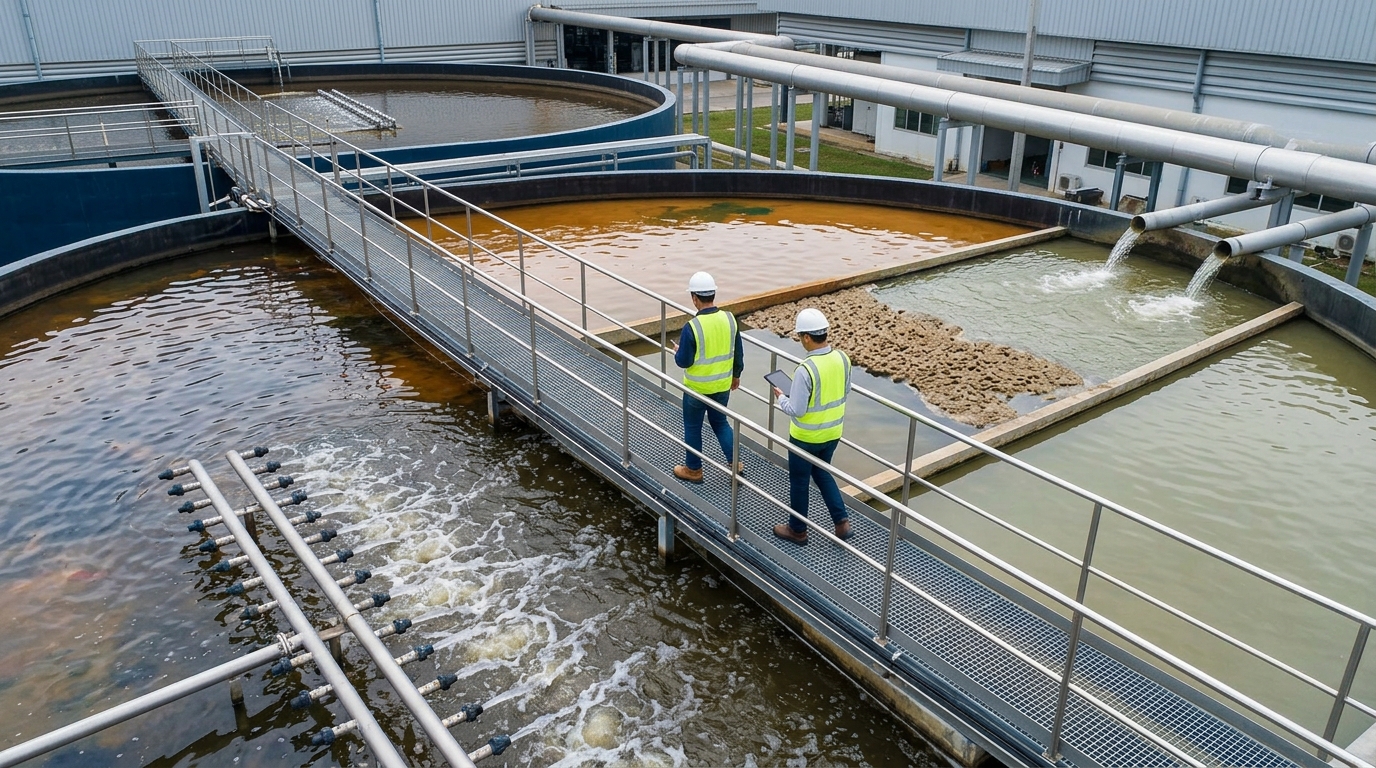
The garment industry has a chemistry problem that regulators have circled for decades and manufacturers have largely avoided solving. The World Bank has cited studies suggesting the treatment and dyeing of textiles is responsible for up to one fifth of industrial water pollution globally. In textile dyeing wastewater alone, some studies cited by the World Bank describe 72 toxic chemicals, 30 of which resist removal by conventional treatment methods. That is the baseline every fabric mill starts from before a single shirt leaves the floor.
Now, two distinct biological approaches are converging on that problem simultaneously, and the market has not yet priced which one wins.
The Trade the Options Market Is Missing
The first approach is already commercial. Pectinase enzymes are used in textile processing, including as part of enzymatic scouring and preparation steps that can reduce the need for harsher chemistry. Laccase and peroxidase enzymes are being actively researched as biological alternatives for oxidizing a wide range of synthetic dye molecules and breaking them down into less harmful compounds, though performance and economics can vary with dye chemistry and real-world mill conditions. These are not lab curiosities. They are production-stage tools being deployed at mills now.
The second approach is more disruptive. In May 2026, researchers at Washington University in St. Louis published findings in Advanced Materials on a protein hybrid called SAM. Produced in bioreactors using genetically engineered microbes, these materials are designed to be recyclable after use and remade into the same fibers over multiple cycles, and microparticles released during washing are intended to be biodegradable. Unlike many petrochemical-based fibers that lose integrity during recycling, the researchers reported that these protein-based textile fibers dissolve in a formic acid solution within seconds and can be reformed into durable materials. That targets the persistent microplastic shedding that plagues synthetic fabrics across their entire commercial life.
Who Collects the Revenue
Novonesis, formed through the 2024 merger of Novozymes and Chr. Hansen, became the global leader in industrial enzymes with a near-50 percent market share. The company trades on OTC markets as NVZMF at roughly $63 per share, and reports Q3 earnings on November 5.
Novonesis announced a €600 million investment in September 2026 to expand its Patalganga site in India and build a next-generation enzyme production facility, with operations expected to begin in 2030. That capital commitment is the tell: the company is betting that textile and industrial biosolution demand will structurally outpace today’s pricing. Its H1 2026 results delivered 8 percent organic sales growth, with the company increasing its full-year outlook for organic sales growth.
The Options Opportunity
The thesis is straightforward. Regulatory pressure on textile wastewater is tightening across the EU and South Asia, while Asia-Pacific still leads in sheer manufacturing volume. Novonesis sits at the intersection of both vectors.
A November call spread on NVZMF, structured to capture Q3 earnings upside with defined premium at risk, gives exposure to a company with consistent organic growth, an expanding production footprint, and a catalyst in 23 days. Implied volatility on OTC-listed names like NVZMF tends to be thin, so execution discipline matters: use limit orders and size the position where total premium at risk fits comfortably within a single-idea allocation.
The thesis breaks if Q3 organic growth disappoints or if currency headwinds widen more than the guidance update absorbs. Neither is the base case given the H1 trajectory. What the market consistently underestimates with industrial biotech is the regulatory tailwind compounding beneath the surface. Microparticles shed during washing are designed to be biodegradable, offering a direct alternative to synthetic fibers that release persistent microplastics, and a circular recycling system could reduce biomanufacturing costs over successive production rounds. That cost curve could eventually reach price parity with petrochemicals, and when it does, the enzyme suppliers collecting tolls on every meter of fabric processed will already own the customer relationships.
The broader market context reinforces why this trade is timely. Capital has been rotating out of speculative tech and into industrial and real-economy stocks, with energy and industrials leading sector performance in 2026.
The garment industry’s chemical waste problem is being solved in bioreactors. Novonesis Q3 on November 5 is the nearest catalyst to confirm that the revenue is following.