There is a $300 billion problem sitting inside the world’s largest drug companies, and the industry’s answer to it is a needle swap.
The scale of what is coming is not in dispute. Between 2025 and 2030, more than $300 billion in prescription drug revenues will lose patent exclusivity, covering nearly 200 drugs, including roughly 70 blockbusters generating over $1 billion each in annual sales. The 2016 version of this reckoning eroded about $100 billion. This one is three times that size.
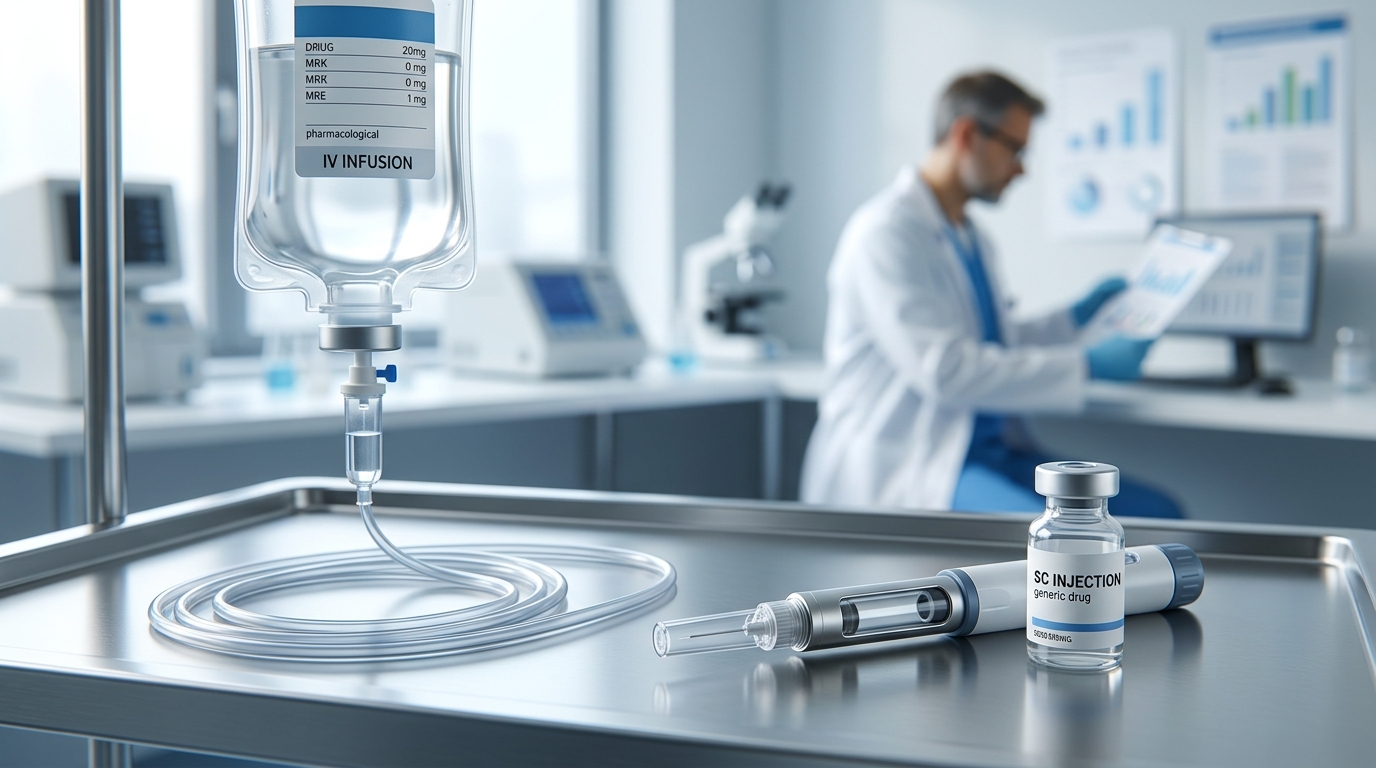
Faced with those numbers, pharma’s highest-ROI response has not been an entirely new molecule. It has been reformulation. New delivery routes, dosage forms, and excipient combinations each generate fresh intellectual property and market exclusivity, making reformulation the most financially efficient answer to the cliff. The mechanism is straightforward: patent a new way to deliver the same drug, migrate patients to the new version before biosimilars reach the original, and effectively restart the exclusivity clock.
Merck’s execution of this playbook around Keytruda is the clearest live example. The best-selling drug in the world, Keytruda pulled in about $29.5 billion in 2024 sales, and some forecasts have sales peaking around $33 billion in 2026. As the infused version is expected to face biosimilar competition beginning in December 2028 when Merck’s primary U.S. compound patent expires, the subcutaneous formulation will be critical to the company’s top-line stability. Keytruda Qlex, approved by the FDA on September 19, 2025, offers two dosing options: a subcutaneous injection every three weeks or every six weeks, depending on the regimen. By transitioning patients to Qlex, Merck is aiming for additional years of protection around essentially the same therapeutic effect, with some analysts arguing the subcutaneous follow-on could still be a multibillion-dollar product in the next decade.
Bristol Myers Squibb ran the same play first. BMS has long planned around a 2028 loss of exclusivity for Opdivo’s core patent position, and it has said the Opdivo Qvantig franchise could extend into the 2030s. Subcutaneous administration cuts treatment time to three to five minutes compared to about 30 minutes for the intravenous version. Critics call it a product hop. The companies call it patient convenience. Both descriptions are accurate.
GLP-1 manufacturers, who have had about 57 percent of the patents cited in major GLP-1 patent lawsuits tied to delivery devices, are drawing similar scrutiny as generic challengers push closer to market. Novo Nordisk has had 320 U.S. patent applications filed for Ozempic, Rybelsus, and Wegovy, all built on the same active ingredient, semaglutide.
Where the options angle sits is in Merck specifically. MRK was trading around $148 in mid-September. Merck is scheduled to announce its Q3 earnings on October 29, 2026. That report is the next structured moment when the market will revisit how quickly Qlex is converting the Keytruda patient base and whether Merck’s full-year revenue guidance holds despite the roughly $2.5 billion headwind the company has flagged from generic competition and other pressures.
A bull call spread targeting a move toward the high end of analyst price targets into earnings costs relatively little given where IV Rank sits. Define the risk at the premium paid and let the October 29 report do the work. If Qlex conversion data disappoints, the spread expires worthless. If it confirms that the needle-swap strategy is ahead of schedule, the position has room to run.
What would break the thesis: any court ruling that invalidates the Qlex delivery patents, a faster-than-expected biosimilar entry for IV pembrolizumab, or evidence that oncologists are resisting the formulation switch. Critics argue Merck will shift patients to the injectable version before IV biosimilars enter the market, locking in market share for the new protected version, but if that migration stalls, the entire Qlex revenue projection unravels.
The delivery upgrade is legal, clinically supported, and already approved. Whether the market is fully pricing the transition risk that remains is the question October 29 will begin to answer.