
October 17, 2026
When oil spikes on a shipping-risk premium rather than demand, the equity winners are not who most traders assume.
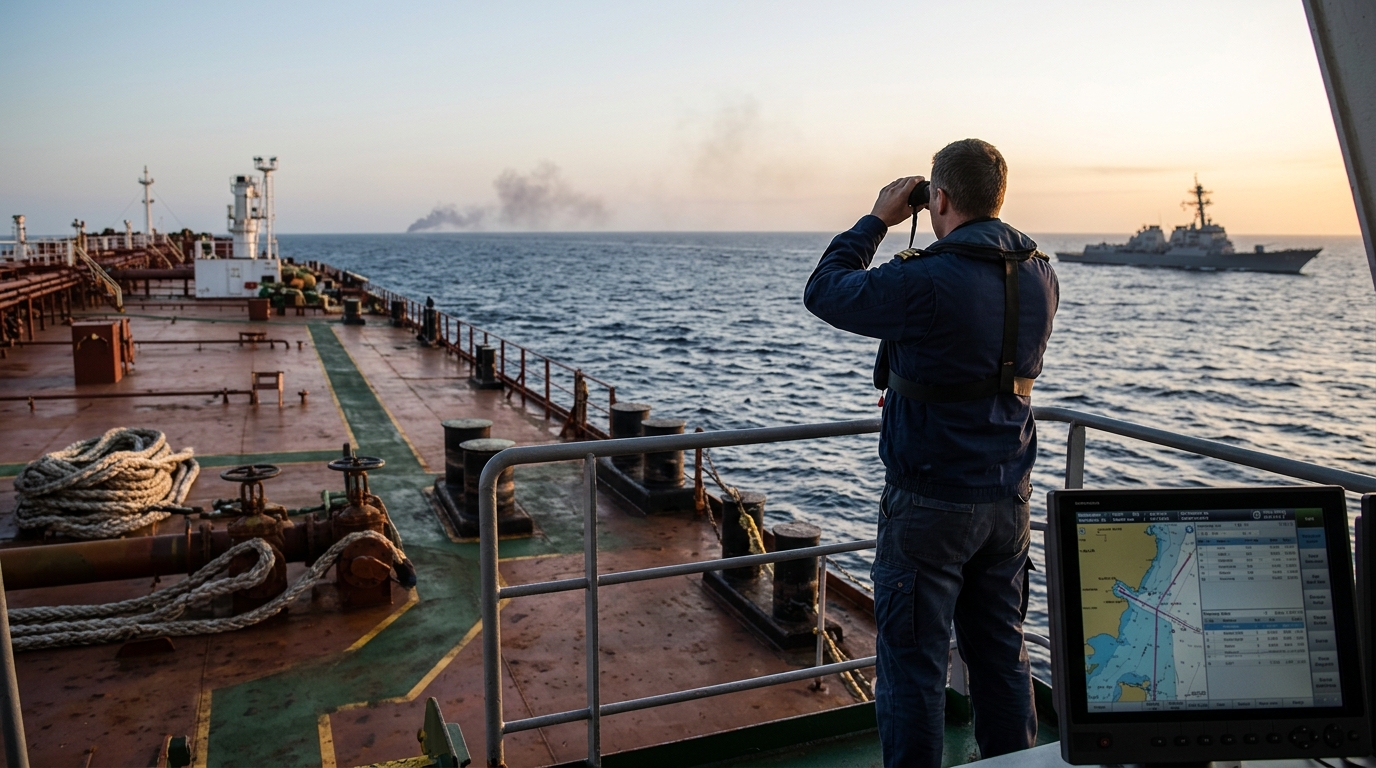
Ten ships struck in six days. A container ship, GFS Pride, sank after being hit by an Iranian projectile earlier this week, according to U.S. Central Command. And now Trump telling Newsmax the U.S. may have to strike Pickaxe Mountain, a fortified underground facility linked to Iran’s nuclear program, while ruling out nuclear weapons and ground troops. Iran’s president said Saturday he is ready for dialogue, but oil markets are not pricing dialogue. They are pricing closure.
AI CEO Issues Code Red: Prepare for Meltdown
The CEO of this AI company (click here to get the name, 100% free) just issued a CODE RED in an internal memo…
Warning his employees that they’re dealing with a critical situation.
Another company executive even implied they might need a government bailout.
And now Jim Rickards is predicting this company is about to go bust, in a full-blown AI meltdown that could be 10 times bigger than Lehman Brothers.
Brent settled at $109.86 Friday, up 3.7%, after touching $110 for the first time since May. The strait is effectively closed to commercial shipping, with just two ships transiting on October 11 against a normal daily rate of roughly 85. Kpler data cited in industry coverage shows daily average oil flows through the strait running around 11.9 million barrels per day on a trailing seven-day basis in early October, versus a baseline near 17.1 million.
Who Profits From a Risk Premium, Not a Demand Spike
This distinction matters more than most traders give it credit for. A demand-driven oil rally lifts all boats: producers earn more on every barrel, refiners see throughput expand, integrated majors benefit top to bottom. A shipping-risk rally is different. It is not about more oil being consumed. It is about the same oil costing far more to move. That changes the beneficiary set entirely.
Physical markets are signaling tightness in refined products: European diesel futures have more than doubled this year. The Gulf Coast 3-2-1 crack spread peaked at an all-time high of $72.64 on September 22, and that margin spike is flowing directly into downstream earnings. ExxonMobil signaled Friday that higher refining margins during Q3 are likely to lift downstream profit by $4.5 billion versus the second quarter. XOM reports full results October 30.
They Proved It Worked in ’76. Then Buried It.
In 1976, Chevron tapped an energy source so powerful it could run a city, then killed the project, and Unocal and Texaco did the same.
Now one company has spent sixty years perfecting what Big Oil refused to touch.
Google locked in a 15-year contract, Bill Gates wrote a $100 million check, and on October 20th, the government hands it an edge no other energy source gets.
Upstream producers face the opposite dynamic. Exxon’s upstream earnings are projected to decline by $1.3 billion quarter-over-quarter, even as Brent averages around $105. Why? Because the risk premium embedded in crude prices reflects supply uncertainty, not volume. A barrel that cannot safely transit the strait is not a barrel generating revenue.
Tankers: The Clearest Structural Beneficiary
The equity expression with the most direct tie to this crisis is not XOM. It is the VLCC operators. Frontline (FRO) is up roughly 144% year-to-date; International Seaways (INSW) has gained approximately 151%; DHT Holdings (DHT) has more than doubled. These moves are not irrational: DHT reported that approximately 78% of available Q4 revenue days are already booked at an estimated average rate of $225,200 per day, versus $167,100 per day in Q3 spot operations.
The wrinkle for tanker bulls right now is the shadow fleet. The Trump administration is weighing targeted easing of sanctions on shadow fleet vessels, and freight futures pulled back on that news even though traders and analysts say the practical capacity impact would be minimal. The shadow fleet report hit FRO on October 15, when the stock fell about 6.6% on the day. That selloff is the options opportunity.
5 Little-Known Stocks Behind Today’s Defense Tech Shift
Behind the headlines, a major transformation is underway.
Modern warfare is being driven by AI, autonomous systems, and next generation technology. A handful of lesser known companies are helping power this shift.
This report uncovers five stocks quietly playing a critical role in the future of defense.
The Trade
A bull call spread on FRO targeting a recovery toward the prior week’s high over the next 30 days. With implied volatility elevated after Friday’s spike, a spread rather than an outright long call contains the premium cost and defines risk precisely. The shadow fleet noise is policy speculation, not policy implementation. Shadow fleet ships still face other countries’ sanctions and often lack the class certification required to move legal cargoes commercially, meaning the actual rate impact would likely be modest. Meanwhile, war-risk insurance for tankers is pricing at 30 times pre-crisis levels, the physical tightness is real, and Q4 bookings at DHT are already locked in above Q3 spot rates.
The duration of the constraint matters as much as its current intensity. Iranian officials have framed their conditions for reopening the strait in terms that effectively price in a supply disruption running through 2029.
What invalidates the thesis: a genuine diplomatic breakthrough, a ceasefire before November, or a faster-than-expected shadow fleet ramp. Trump’s own comments Friday that the war will end “very soon” are worth monitoring. He also said Pickaxe Mountain could be a target for further U.S. strikes, a comment that points toward escalation rather than resolution. Iran’s willingness to talk and Trump’s willingness to threaten are not mutually exclusive, but the strait does not reopen overnight even when diplomats start meeting. Position size accordingly: defined risk, not a directional bet on war resolution.