Hey Trader,
This certainly isn’t going to win me any friends in the industry.
But I don’t care.
For Black Friday, I’m practically giving away my proprietary “Snapback Indicator.”
It’s yours for just a single payment of $7. No strings attached.
When you see the Crash Alert, that’s your cue to get out or go short.
When you see the Bull Run Alert, that’s your cue to buy or go long.
Don’t make another trade until you see this indicator in action. Best of all… I’m giving you LIFETIME access. Others paid $500 for this. But you’re getting lifetime access to the Snapback Indicator for just $7.
Go here:
Black Friday Bombshell: “Snapback” Indicator For $7
In your corner,
Thomas Wood
Base Camp Trading
P.S. There’s an unusual reason why I’m giving you such an outlandish discount on this incredible indicator. Full explanation here.
China’s Export Engine Is Now Its Only Engine. Shenzhen Is the Risk.
Beijing’s growth model is running on one cylinder. That matters enormously for anyone holding a position in Chinese consumer names ahead of November 19.
China’s economic slowdown worsened in October, with retail sales, industrial output, and fixed-asset investment all missing forecasts. Retail sales rose just 0.4% year-on-year, short of the 0.8% consensus and a sharp drop from September’s 1.1% gain. The underwhelming figure is more worrying because October consumption should have received a boost from the week-long National Day holiday and the Singles Day shopping promotions.
Fixed-asset investment fell 8.1% year-on-year in the first ten months, deepening from the 7.2% decline recorded through the first three quarters. Industrial output slowed to 4.8%, notable because factories have been the main source of strength this year. The slowdown came despite a soft base from last October, pointing to cooling momentum rather than base effects.
The Single Engine
Chinese exports jumped 35.2% in October year-on-year in US dollar terms. But while the global AI investment boom is expected to keep demand for Chinese technology products strong into 2027, analysts warn that deeper dependence on external markets could leave China more vulnerable to protectionist measures while masking persistent weakness at home. Semiconductor exports soared 137.1% in value in October alone, as global AI infrastructure demand drove record shipments tied to AI-related supply chains.
The asymmetry is stark. Everything that is working runs through the export channel. Everything domestic is stalling. “No new stimulus measures are expected to be introduced for the remainder of the year,” said Zhaopeng Xing, senior China strategist at ANZ. With third-quarter GDP growth running at 4.5% year-on-year, analysts believe Beijing remains on target to reach 4.5%-5.0% without the need for significant additional stimulus. That is precisely the problem: the official comfort zone is being maintained by one bet, and that bet expires in January.
The Trade Talks Overhang
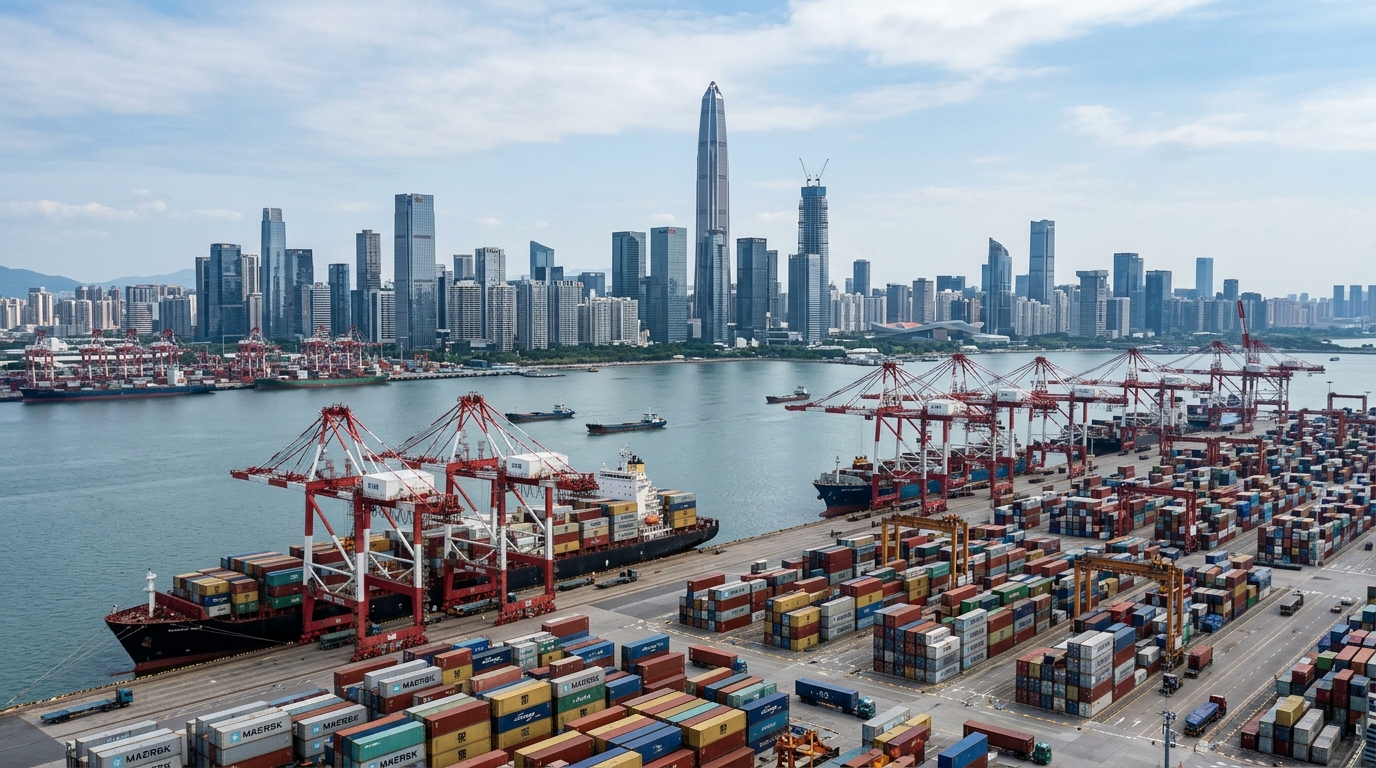
The White House has said Trump will meet with Xi on November 19 in Shenzhen, on the sidelines of the APEC meetings. Separately, Washington has formally extended the US-China trade truce until January 10, 2027. The agenda is expected to include the trade truce and broader discussions over the bilateral trade relationship amid the United States’ persistently large trade deficit.
Officials on both sides are expected to steer toward extending the truce beyond January rather than seeking a comprehensive deal, and US officials have signaled not to expect a formal, sweeping agreement out of the broader Shenzhen meetings. That means PDD, JD.com, and Alibaba remain hostage to headline risk through the week. Any hint that the truce extension stalls reawakens the tariff clock on the one pillar holding up Chinese growth.
The tariff clock is not the only lever Beijing holds over the talks. China’s rare earth export controls have remained in place despite direct US pressure, giving Beijing a second source of coercive leverage at the table.
The Options Opportunity
Alibaba options volumes recently hit 247,000 contracts, more than double the typical daily average. Call options outpaced puts, with implied volatility climbing to approximately 49.2, placing it in the top decile of its one-year range. With the Shenzhen summit three days away and no stimulus backstop in place, that elevated IV creates an interesting structure for a defined-risk trade.
The position: a put debit spread on Alibaba (BABA) using the December expiry, targeting the scenario where Shenzhen talks disappoint or stall. Buy the at-the-money put, sell the put 10-12% lower to reduce premium. The spread pays if the market concludes that the truce clock is running without a credible renewal, which today’s data makes more likely, not less. “The scale of stimulus will depend on the extent of the export slowdown,” one economist noted, meaning a tariff shock and a domestic demand shock arrive simultaneously.
Time decay works against the buyer between now and Thursday. The thesis either confirms or collapses at the summit. Size accordingly: this is a binary-event trade, not a trending position.
The Beast Verdict
“The outlook for exports depends on how long the AI boom will last,” Macquarie analysts wrote, expecting exports to accelerate further in the fourth quarter before starting to slow from the first quarter of 2027. That window is exactly when the trade truce expires. Beijing has no domestic demand buffer, no fresh stimulus planned, and a surplus that makes US negotiators uncomfortable. The October data makes the Shenzhen outcome more consequential, not less. A defined-risk put spread on BABA prices in that asymmetry before the room gets to decide.