

The Money Already in Your 401(k) Could Buy Physical GOLD
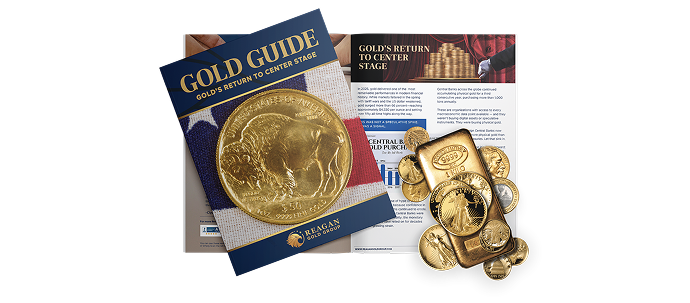
Here’s something many retirement savers don’t realize. You may be able to use money ALREADY sitting in an eligible 401(k) or IRA to purchase physical GOLD through a self-directed GOLD IRA. That means you may not need to come up with any additional money. With Washington shifting overnight and uncertainty around inflation and the dollar, more Americans are exploring this option. Don’t be the last to find out how it works. Request your FREE guide today.

P.S. GOLD isn’t immune to losses, and GOLD IRAs come with fees, rules and risks. Get the facts on fees, rules and risks BEFORE you move a dollar. Request your FREE guide today.
Coinbase Is at a Three-Year Low. Here Is Why Options Beat Shares Right Now.

Monday took Coinbase to its lowest close since November 16, 2023. Exactly three years to the day. COIN fell as low as $117.32 before closing at $119.84, down about 6%.
The exchange has shed about 31% over the past month. Strategy, meanwhile, did not just fall. It fell while holding 850,364 Bitcoin bought at an average of $75,456, leaving the position underwater at current prices.
The whole equity complex moved, not just the two marquee names. Galaxy Digital and BitMine also dropped more than 7%, while Circle fell 7.6% and Robinhood and Hut 8 each lost more than 5%.
Circle’s 7.6% drop is not just sympathy selling. Circle faces its own collision of a crypto downturn and a rate cycle that directly erodes its reserve income model.
Bitcoin itself is down more than 15% so far in November. The coin started the week near $64,600 after touching $62,000 over the weekend, and it continued to trade in a roughly $64,000 to $65,000 band during Monday’s U.S. session.
Why the Equities Are the Trade, Not the Coin
Bitcoin is uncomfortable. The equities are dislocated. That distinction matters for where the asymmetric opportunity sits.
Strategy’s roughly $75,456 cost basis is the level to watch. It is not a floor, but it is the price the company’s story depends on. The company has leaned heavily on equity issuance as a funding model that works best when MSTR shares maintain a premium above the underlying Bitcoin value. With Bitcoin below that cost basis today, that premium can compress quickly. And a sharp slide in Bitcoin’s price over the past month has intensified scrutiny over how long Executive Chairman Michael Saylor can avoid selling.
Coinbase carries its own structural tension. The stock closed November 13 at $127.65, a 52-week low close, and transaction revenue in the third quarter was down 44% year over year. Now it has broken below that level entirely.
The Short Interest Problem, and the Opportunity
Here is where the options angle sharpens. Short interest is elevated for both equities, at about 10.8% of Coinbase’s float and about 7.4% of Strategy’s.
Both stocks have slipped into oversold territory, with COIN’s 14-day RSI and MSTR’s 14-day RSI each in the high 20s on Monday. Oversold readings do not stop declines, but they do raise the cost of being wrong on direction. The bears have company. So do the bulls.
That is exactly the situation where owning a share outright is the wrong instrument. A shareholder has to be right about direction and timing. An options buyer defines the loss on day one.
The Trade: COIN Bull Call Spread
The thesis is not that COIN has bottomed. The thesis is that roughly 10.8% short interest at a multi-year low, combined with deeply oversold RSI readings, creates the conditions for a sharp reversal if any catalyst breaks the sellers’ momentum. That catalyst could be a stabilization in Bitcoin above $65,000, a pullback in December Fed hike expectations, or simply a short-covering cascade.
COIN options are generally liquid, with implied volatility often elevated versus the broad market and active daily volume across expirations. Recent 30-day at-the-money implied volatility has been in the mid-to-high 60% range, which puts premium closer to mid-range than true panic levels. A debit spread caps the outlay without surrendering the directional exposure.
A December or January bull call spread, buying a strike near $125 and selling a strike near $145, defines the risk to the premium paid while targeting a 15% recovery from current levels. The short leg at $145 caps the gain but substantially reduces cost. If COIN fades further, the entire position is the only loss.
What Would Break This Trade
Three things can sink it. Worries about higher U.S. interest rates are already pressing digital assets, and markets have been sensitive to shifts in expectations for the Federal Reserve’s December meeting. A larger-than-expected hike would pressure Bitcoin and the equity complex further.
The next key support for Bitcoin sits at $62,000 to $63,000, and a break below could lead to a test of $60,000. A move to those levels would almost certainly drag COIN well below today’s close. The defined-risk structure of the spread is not decoration. It is the entire point.
The Beast Verdict
COIN at a three-year low with about 10.8% of its float sold short is not a simple short. It is not a simple buy either. It is a situation where the direction is genuinely contested and the magnitude of a move in either direction could be large. That is the precise environment where a bull call spread earns its place: it names a price for being wrong, removes the ruin scenario, and still captures a meaningful payoff if the short base unwinds. Watch $63,000 on Bitcoin as the line that separates a tactical bounce from a deeper breakdown. As long as that level holds, the squeeze potential remains alive.