Dear Income Seeker,
If you’re struggling to find high-probability income trades…
Or think you’ve found them…
Only to be frustrated – and disappointed – with the money you’re bringing in…
You owe it to yourself to check out this website.
Because it will give you the opportunity to get your hands on a little-known 1-hour trading secret… 100% free of charge.
Do your future self a big favor and claim a copy now.
Because at some point soon, it won’t be free.
To better trading,
– Drew Day
Partner
Base Camp Trading
Skip MSFT. The Real Oct. 7 Trade Is in RTX Spark PCs
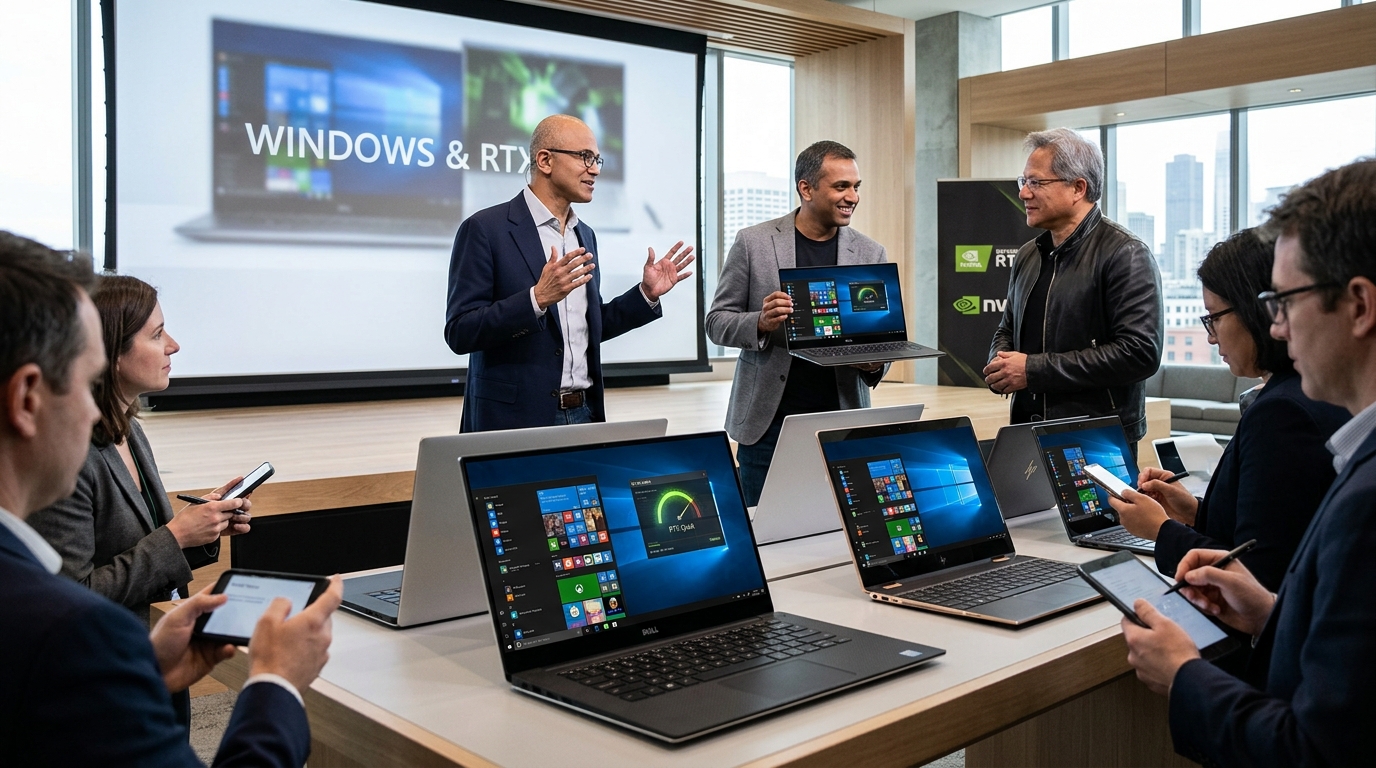
Microsoft confirmed a Windows and Surface event in San Francisco on October 7 at 10 a.m. PT. Satya Nadella, Surface chief Pavan Davuluri, and Nvidia CEO Jensen Huang are slated to appear, with RTX Spark expected to be central to the agenda. It will be Microsoft’s first large Windows-focused event in more than two years. MSFT slipped on the news. The more interesting trade is not in the stock that just dipped.
What the Market Is Missing
Nvidia introduced RTX Spark as a system-on-chip platform for Windows PCs that can run AI workloads locally, pairing a Blackwell RTX GPU with a Grace CPU and configurations marketed at up to 1 petaflop of FP4 AI performance and up to 128GB of unified memory. October 7 is not a concept presentation. RTX Spark is positioned to power Surface Laptop Ultra and a Surface RTX Spark Dev Box, both of which Microsoft has described as pre-release products, with key details still incomplete, including full pricing and availability. That disclosure is coming soon.
Here is the part the market has priced loosely: Microsoft is not the only company whose revenue depends on what happens on that stage. Nvidia said RTX Spark laptops and compact desktops would be available this fall from Asus, Dell, HP, Lenovo, Microsoft Surface, and MSI, with additional models from Acer and GIGABYTE to follow. Coverage around the platform has pointed to a first wave of roughly eight laptops for the fall, including Surface Laptop Ultra, ASUS ProArt models, Dell’s XPS 16 Creator Edition, HP OmniBook models, Lenovo’s Yoga Pro 9n, and an MSI Prestige configuration. October 7 is effectively the retail starting gun for all of them.
Technical and Fundamental Alignment
HP has now put out fresh details on its OmniBook Ultra 16 and OmniBook X 14, saying both are powered by Nvidia RTX Spark and Windows, after first previewing them at Computex in June. Dell is positioned similarly with its XPS 16 Creator Edition. Early demand signals and pricing chatter may be real, but they remain channel talk until we see confirmed MSRPs and inventory on shelves. Demand appearing ahead of availability is not a red flag for the hardware suppliers. It is a green one.
MSFT traded around the low-$490s recently, below its 52-week high of $553.72. The fundamentals are solid. In fiscal Q2 2026, Microsoft reported $81.3 billion in revenue, up 17% year over year, and adjusted EPS of $4.14. But the clean timing edge here is the October 7 hardware catalyst. Dell and HP trade with far less embedded expectation around that specific stage moment.
Options Perspective
The trade structure that fits here is a bull call spread on DELL or HPQ expiring in late October. Both names carry lower absolute premiums than MSFT, and a positive October 7 reception, confirmed pricing, and a firm ship date for RTX Spark devices should move hardware revenue estimates more directly than it moves MSFT’s cloud multiples.
On DELL specifically, a call debit spread targeting a move into the mid-$150s by October expiration keeps defined risk on the table while leaving room to capture a re-rating if the event accelerates enterprise PC refresh expectations. Implied volatility on DELL options remains modest relative to the binary nature of this catalyst, which is exactly the kind of pricing dislocation Option Beast looks for.
Risk Management
Performance, battery life, thermals, and compatibility remain vendor claims or proxy evidence until shipping hardware is independently tested. If October 7 reveals delays, premium pricing well above the high-$2,000 range that dampens consumer demand, or a muted Windows software story that fails to justify the hardware, these spreads lose their premium and nothing more. That is the point of a debit spread structure: the loss is set before the trade opens.
The Windows ecosystem does need a response to Apple’s latest Mac momentum, including new M6 and M5 Ultra chips in Apple’s desktop lineup. On the software side, Nvidia and Microsoft have emphasized broad ecosystem support for RTX Spark, but specific claims about Adobe “fundamentally restructuring” Premiere and Photoshop for RTX Spark, and a count of “over 100” partners, should be treated as directional until Microsoft, Adobe, or Nvidia publishes a precise, attributable figure. That ecosystem commitment still narrows the risk that October 7 is a non-event.
The Beast Verdict
Microsoft put a hard date on the calendar, brought Jensen Huang to the stage, and handed the PC hardware supply chain a retail launch window. MSFT dipped on the news because the market reads it as a hardware story, not a cloud catalyst. That reaction creates the opening. Dell and HP are cheaper expressions of the same event with more direct revenue exposure to unit shipments this quarter. A defined-risk call spread on either name, expiring after October 7 but before the noise of November, is where the risk-reward tilts sharply in your favor. Watch for any pre-event pricing leaks or IFA follow-on announcements as confirmation that the October ship date holds.