

Dear Reader,
Back in 2001, a sleepy South African newspaper company did something strange.
It bought a 46% stake in a tiny startup almost nobody had heard of.
That startup was Tencent.
Three years later Tencent went public and became a global giant.
And that boring newspaper stock?
A $5,000 investment could have grown to more than $75,000 inside a decade.
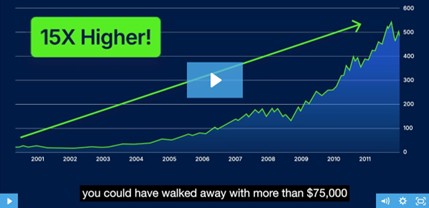
Fifteen times your money… on a company most people would have laughed at.
One tech legend calls this a “Second IPO”, and he says it’s about to happen again.
Click here to watch how these “Second IPOs work >
And the ticker symbol of the company that could be next.
Yours in smart speculation,
Stephen Prior, Publisher
Monument Traders Alliance
Treasuries Did the Job Thursday. Now Payrolls Test This Rally.

When the S&P 500 shed 4.4% Thursday and the Nasdaq entered correction territory for the first time since April, there was exactly one place in the conventional portfolio that worked: U.S. Treasuries. Gold closed higher, but it had already been rallying hard on the election result and the dollar’s slide, it did not respond to Thursday’s equity carnage the way a true fear hedge should. Bonds did.
The benchmark 10-year Treasury yield fell to roughly the mid-4.8% area during the session, its lowest level since early September, while the two-year yield slipped into the mid-4.4% area. That is a meaningful move in a single session, and it arrived while the Nasdaq Composite tumbled 5.52% and the S&P 500 fell 4.4%, marking its largest single-day decline since April 2025.
Now comes the read that determines whether that Treasury rally has legs: the October nonfarm payrolls report, due Friday at 8:30 a.m. ET, with consensus expecting a gain of 65,000 jobs versus September’s 29,000. The unemployment rate is expected to remain unchanged at 4.2%, while wage growth is forecast to tick up slightly but remain below a pace that would put upward pressure on inflation.
What makes this report more interesting than the headline number is the policy context around it. CME FedWatch is still showing the market leaning toward a 25-basis-point hike at the Fed’s December meeting, but the odds have eased into roughly the mid-60% range rather than the high-80s seen earlier in the week in some market commentary.
Here is the fork in the road. A payroll print that comes in well above 65,000, say, 100,000 or stronger, likely hardens December hike expectations and sends yields higher, unwinding at least part of Thursday’s bond rally. A soft print, 40,000 or below, could pull hike odds down and bring the 10-year toward the 4.70% area.
The options opportunity sits in TLT, the iShares 20+ Year Treasury Bond ETF. TLT activity has been call-heavy heading into this week’s data, a posture that reflects bullish positioning in long-duration bonds. The put/call volume skew toward calls aligns with the thesis here: a soft payroll number extends the bond rally and punishes anyone still positioned for aggressive Fed tightening.
The strategy: a bull call spread on TLT, buying the November 20 $83 call and selling the $86 call. This defined-risk structure profits if TLT extends higher on a weak jobs number, while the short call caps upside if the data surprises to the upside and yields reverse. Time decay works against the position modestly given the two-week horizon, but a soft print could deliver the move in hours rather than days.
What kills this trade is a blowout number, payrolls above 100,000 paired with wage acceleration. That would reignite December hike conviction and send TLT back toward its October lows. Position size accordingly: this is a catalyst bet, not a duration allocation.
The Fed is still arguing about hiking into a labor market that added only 29,000 jobs in September. If October confirms that softness, Treasuries are not just a hedge, they become the most credible trade in the room.