
Tim Cook called it a “hundred-year flood.” The market called it a sell signal. Apple posted record fiscal Q3 results Thursday evening, beat on revenue and earnings per share by a meaningful margin, and still watched its stock fall about 2% after hours. The China miss and the guidance shortfall grabbed the headlines. But the more important story is what happens to Apple’s cost structure between now and September 1, when a hardware engineer named John Ternus inherits all of it.
Why This Stock Matters Now
This is not a routine post-earnings pullback. Apple just told the market that supply constraints will increase significantly in the quarter ahead, that memory costs will continue rising, and that the company has limited flexibility to respond. At the same time, it is preparing to hand off its chief executive. The confluence of a structural cost problem and a leadership transition is what makes this moment genuinely different from a normal earnings reaction.
The Investment Thesis
Apple remains the most profitable consumer hardware franchise on earth. But the market is now being forced to price something it has not had to price in years: a multi-quarter margin compression cycle with no clear floor, arriving at the precise moment a new CEO takes the controls. The question is whether the selloff is the beginning of a prolonged reset or an overreaction to a temporary supply dislocation. The answer depends almost entirely on what happens to memory chip costs over the next two quarters.
The Business Behind the Stock
Apple reported fiscal Q3 revenue of $109.4 billion, a 16% year-over-year increase, with diluted EPS of $2.01 (basic EPS was $2.02). This is the first time the company has posted three straight quarters of more than 20% growth in iPhone sales, with the metric rising 21.7% year over year to $56.99 billion.
Gross margin came in at 50.1%. Tariff refunds added roughly 11 cents to EPS; stripping out the benefit, earnings exceeded expectations by a much smaller margin. The quality of the beat, in other words, was thinner than the headline implied.
Services, which includes iCloud, Apple Music, and App Store fees, grew about 12% year over year to $30.98 billion. That was slower than fiscal Q2’s 16.3% growth rate. For a business that was supposed to insulate Apple from hardware cycles, that is a notable deceleration.
What’s Changing
The China miss attracted the most attention in post-earnings coverage, but the competitive picture there is less alarming than the revenue line suggests. Huawei strengthened its leadership in China’s smartphone market, increasing its share to 22.6% in Q2 2026 from 18.1% a year earlier. Yet Apple delivered the strongest shipment growth among major smartphone brands, with its market share rising to 18.1% from 13.9% last year, and shipments up 24.4% year over year. The revenue miss reflected a contracting overall market and currency headwinds, not a fundamental loss of Chinese consumers.
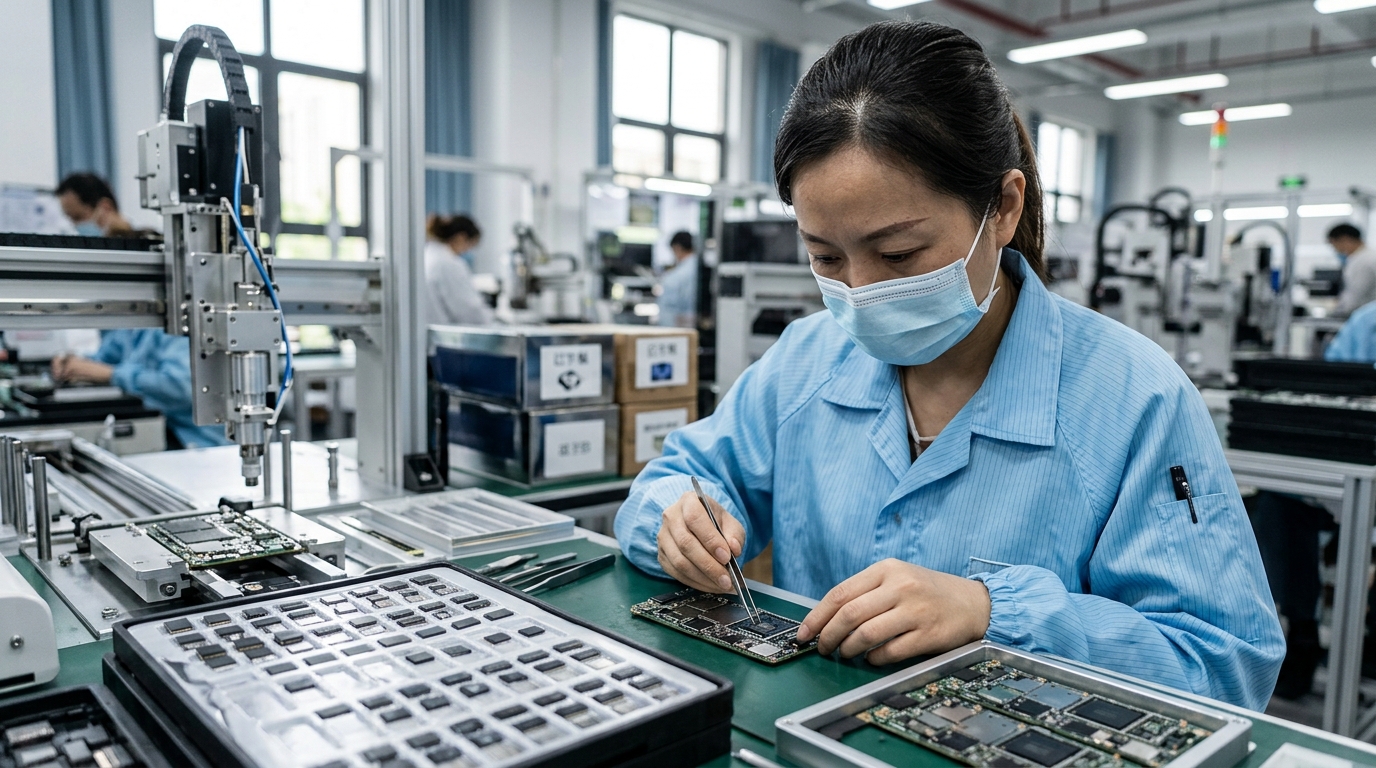
The more serious shift is happening in Apple’s cost structure. Cook told The Wall Street Journal that Apple is dealing with a global memory crunch that he termed a “hundred-year flood,” and a scramble by companies to secure chip manufacturing capacity.
Samsung, SK Hynix, and Micron, the three companies that together supply the vast majority of the world’s DRAM, have systematically diverted their fabrication lines from the low-power DRAM used in smartphones toward high-bandwidth memory, the specialized chip stacked inside every Nvidia AI accelerator.
The September quarter guidance crystallized the concern. Apple said it expects revenue for the current quarter to rise 9% to 11% from the prior year, which implied a midpoint near $113 billion, below what analysts were looking for.
The iPhone 18 launch in September now carries a pricing overhang that Apple has never navigated before. The Wall Street Journal previously reported that the iPhone 18 Pro could start as high as $1,399, citing estimates that Apple’s DRAM cost per unit could climb from $39 to $145 and its flash storage cost from $13 to $51. The company has so far resisted increasing iPhone prices, but many analysts believe it will be forced to do so at some point this year.
And then there is the succession. Thursday’s results were Apple’s final full earnings release under Cook’s tenure as CEO. He will turn over the CEO role to John Ternus on September 1. When asked his vision for the company, Ternus said: “There is so much opportunity for us with everything that’s happening in this space, and we’re just really focused on our plans and very excited about it.” That is a careful answer, deliberately light on specifics, from someone about to inherit one of the most complicated supply situations in Apple’s history.
The Risks
Memory costs have no visible ceiling. DRAM and NAND chip prices have risen sharply in 2026, and the AI buildout is pulling supply toward higher-margin server memory. Apple cannot negotiate its way out of this shortage; the supply physically does not exist.
A Services deceleration is not noise. Services was the story Apple told investors to justify a premium multiple. If that business is now growing closer to 12% than 16%, the valuation math changes. Apple is grappling with a worldwide scarcity of memory chips and processors, a crunch that has already pushed the company to increase prices on Macs and iPads. Higher prices for hardware could suppress unit volumes and, through that, the app and subscription revenue that rides on top.
iPhone 18 pricing is a binary risk. If Apple raises Pro prices sharply to protect margins, it risks handing Huawei its biggest gift since the Mate 60 Pro. If it absorbs the costs, gross margins compress through the holiday quarter. Neither outcome is currently priced into a stock that, heading into Thursday, had gained roughly 25% on the year and briefly crossed a $5 trillion market capitalization.
What Investors Should Watch Next
- iPhone 18 pricing announcement (expected September). The decision to raise or hold Pro prices will define the margin trajectory for the next four quarters.
- John Ternus’s first earnings call (October). His comments on memory supply, AI product strategy, and Services monetization will be the market’s first real read on post-Cook Apple.
- Memory chip pricing. Any signal that DRAM and NAND contract prices are stabilizing would be the single most significant positive catalyst for AAPL between now and year-end.
- China sell-through data at the 618 shopping festival and into the fall. The shipment growth story is intact; the revenue translation needs to confirm it.
Bottom Line
Apple just posted its strongest June quarter on record and the stock fell sharply anyway. The China disappointment is real but overstated as a structural threat. The memory crisis is real and understated as a margin risk. Cook exits having built a nearly $5 trillion company, a remarkable capstone. But the challenges he leaves behind, a component shortage he called a hundred-year flood, a Services business showing clear deceleration, and an iPhone pricing decision that could reshape consumer demand globally, are exactly the kind of problems that test whether a new CEO can lead or just manage. Ternus gets his first call in October. Between now and then, the stock’s trajectory depends less on Apple’s strategy and more on what three semiconductor companies in South Korea and the United States decide to charge for memory chips.